
Here’s an SEO-friendly blog for MaduraiDoctors. It is informative, original, optimized for search engines, and contains no maps, rankings, or promotional content.
Typhoid Symptoms and Prevention – A Complete Guide to Causes, Treatment, and Protection
Typhoid fever is a bacterial infection that can affect people of all ages. It is caused by Salmonella Typhi and spreads through contaminated food and water. Although typhoid is preventable, it continues to be a public health concern in many developing countries, particularly where access to clean drinking water and proper sanitation is limited.
Early recognition of typhoid symptoms and timely medical treatment can help prevent serious complications. This guide explains the causes, symptoms, diagnosis, treatment, prevention, and when to seek medical care.
What Is Typhoid Fever?
Typhoid fever is an infectious disease caused by the bacterium Salmonella enterica serotype Typhi. Once the bacteria enter the body through contaminated food or water, they multiply and spread through the bloodstream, causing fever and other systemic symptoms.
Without appropriate treatment, typhoid can lead to serious complications involving the intestines and other organs.
How Does Typhoid Spread?
Typhoid spreads through the fecal-oral route, meaning the bacteria pass from an infected person’s stool to another person through contaminated food, water, or poor hygiene.
Common sources of infection include:
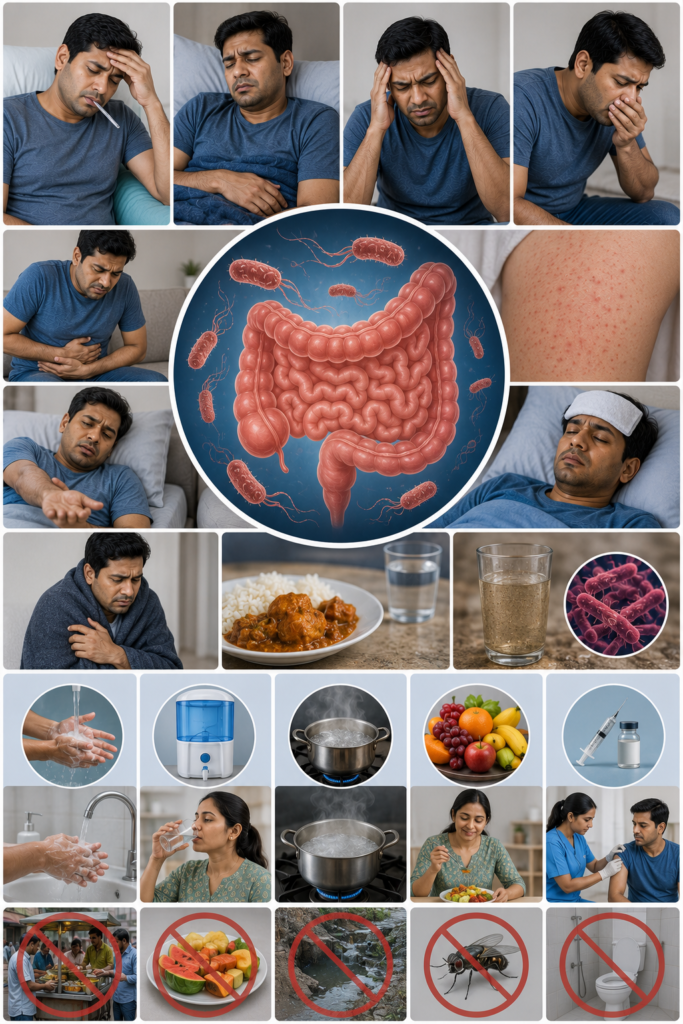
- Drinking contaminated water
- Eating contaminated food
- Poor hand hygiene
- Consuming raw fruits or vegetables washed with unsafe water
- Close contact with someone who is infected or a chronic carrier of the bacteria
Good sanitation and proper food handling are essential for preventing transmission.
Early Symptoms of Typhoid
Symptoms usually develop 6 to 30 days after exposure to the bacteria and often worsen gradually.
Common symptoms include:
- Persistent high fever
- Headache
- Weakness and fatigue
- Loss of appetite
- Stomach pain
- Constipation or diarrhea
- Muscle aches
- Dry cough
- Nausea
- General feeling of illness
Some people may also develop a faint, rose-colored rash on the chest or abdomen, although this is not present in every case.
Advanced Symptoms
If left untreated, typhoid fever may progress and cause:
- Persistent high fever
- Severe abdominal pain
- Abdominal bloating
- Significant weight loss
- Confusion or drowsiness
- Persistent diarrhea or constipation
- Dehydration
- Extreme weakness
These symptoms require prompt medical evaluation.
Possible Complications
Untreated typhoid can lead to serious complications, including:
- Intestinal bleeding
- Intestinal perforation
- Severe dehydration
- Bloodstream infection (sepsis)
- Inflammation of the heart or brain
- Kidney complications
- Pneumonia
Early diagnosis and appropriate antibiotic treatment greatly reduce the risk of these complications.
Who Is at Higher Risk?
Certain individuals have a higher risk of contracting typhoid, including:
- Children
- Travelers to areas where typhoid is common
- People with limited access to safe drinking water
- Individuals living in areas with poor sanitation
- Food handlers with poor hygiene practices
- People with weakened immune systems
Awareness and preventive measures are particularly important for these groups.
How Is Typhoid Diagnosed?
Doctors diagnose typhoid based on clinical symptoms, medical history, and laboratory investigations.
Common diagnostic tests include:
- Blood culture
- Stool culture
- Urine culture (in selected cases)
- Complete Blood Count (CBC)
- Bone marrow culture (rarely required)
- Other laboratory tests as recommended by your doctor
Blood culture is generally considered the most reliable method for confirming typhoid fever, especially during the early stage of illness.
Treatment for Typhoid
Typhoid fever requires medical treatment with antibiotics prescribed by a qualified healthcare professional.
Treatment may include:
- Appropriate antibiotics
- Adequate hydration
- Rest
- Nutritious, easily digestible meals
- Fever management as advised by your doctor
It is important to complete the full course of antibiotics even if symptoms improve early, as stopping treatment prematurely may increase the risk of relapse or antibiotic resistance.
Home Care During Recovery
Recovery can be supported by:
- Drinking plenty of safe fluids
- Eating soft, nutritious foods
- Maintaining good personal hygiene
- Getting adequate rest
- Following the prescribed medication schedule
- Attending follow-up appointments if recommended
Avoid self-medicating with antibiotics without medical advice.
How to Prevent Typhoid
Preventing typhoid primarily involves maintaining good hygiene and ensuring food and water safety.
Effective preventive measures include:
- Wash hands thoroughly with soap and water before eating and after using the toilet.
- Drink clean, filtered, or boiled water.
- Eat freshly cooked food served hot.
- Wash fruits and vegetables with safe water.
- Avoid raw or undercooked foods from unhygienic sources.
- Maintain proper sanitation at home and in the community.
- Practice safe food handling and storage.
These simple habits can significantly reduce the risk of infection.
Typhoid Vaccination
Vaccination can help reduce the risk of typhoid fever, particularly for:
- Travelers visiting areas where typhoid is common
- People living in high-risk regions
- Individuals advised by their healthcare provider based on risk factors
Vaccination does not provide complete protection, so safe food, water, and hygiene practices remain essential.
When Should You See a Doctor?
Seek medical care promptly if you experience:
- Fever lasting more than three days
- Persistent abdominal pain
- Continuous vomiting
- Severe diarrhea
- Blood in the stool
- Confusion
- Extreme weakness
- Signs of dehydration, such as reduced urination or dizziness
Early diagnosis improves recovery and reduces the risk of complications.
Can Typhoid Be Prevented?
Yes. Most cases of typhoid can be prevented through:
- Safe drinking water
- Proper sanitation
- Good hand hygiene
- Hygienic food preparation
- Timely vaccination for eligible individuals
- Early diagnosis and treatment of infected patients
Community awareness and public health measures play an important role in reducing the spread of typhoid.
Conclusion
Typhoid fever is a preventable bacterial infection that spreads through contaminated food and water. Early symptoms such as prolonged fever, headache, weakness, stomach pain, and digestive problems should never be ignored. Prompt medical evaluation, accurate diagnosis, and appropriate antibiotic treatment can prevent serious complications. Practicing good hygiene, consuming safe food and water, and considering vaccination when appropriate are the most effective ways to protect yourself and your family from typhoid fever.