
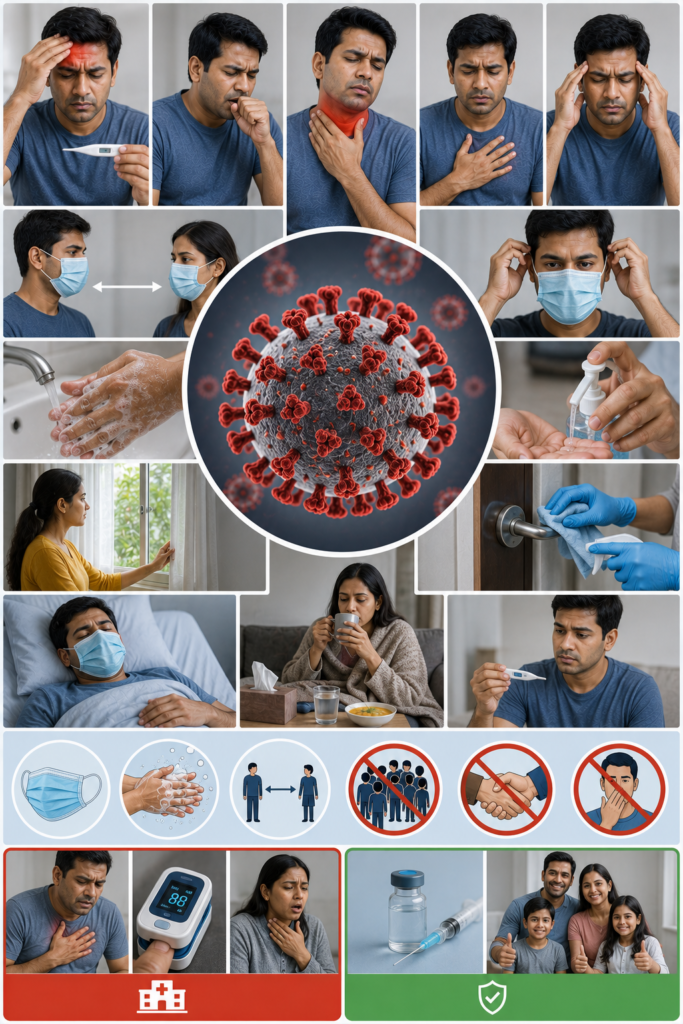
COVID-19 Care Guidelines – Symptoms, Home Care, Prevention, and Recovery
COVID-19 is a contagious respiratory illness caused by the SARS-CoV-2 virus. Although many people experience mild symptoms and recover at home, some individuals—especially older adults and those with underlying medical conditions—may develop severe illness requiring medical care. Staying informed about symptoms, home management, preventive measures, and when to seek emergency treatment is essential for protecting yourself and others.
This guide provides practical information on COVID-19 symptoms, diagnosis, home care, prevention, recovery, and situations that require immediate medical attention.
What Is COVID-19?
COVID-19 is an infectious disease caused by the SARS-CoV-2 virus. It primarily spreads through respiratory droplets and aerosols released when an infected person talks, coughs, sneezes, or breathes. Transmission may also occur through close contact, especially in crowded or poorly ventilated indoor spaces.
Most people recover completely, but some may experience severe complications affecting the lungs, heart, brain, kidneys, or other organs.
Common Symptoms of COVID-19
Symptoms can appear 2 to 14 days after exposure and may vary from mild to severe.
Common symptoms include:
- Fever or chills
- Cough
- Sore throat
- Runny or blocked nose
- Fatigue
- Headache
- Muscle or body aches
- Shortness of breath
- Loss or change in taste or smell
- Nausea or vomiting
- Diarrhea
Some individuals may have only a few mild symptoms, while others may become seriously ill.
Who Is at Higher Risk of Severe Illness?
Certain groups are more likely to develop complications, including:
- Adults aged 65 years and older
- Pregnant women
- People with diabetes
- Individuals with high blood pressure or heart disease
- People with chronic lung disease
- Individuals with kidney disease
- People with weakened immune systems
- Individuals undergoing cancer treatment
- People with severe obesity
These individuals should contact a healthcare professional promptly if they develop symptoms.
How Is COVID-19 Diagnosed?
Doctors may recommend one or more of the following tests:
- Rapid Antigen Test (RAT)
- RT-PCR Test
- Blood tests (when clinically indicated)
- Chest X-ray or CT scan in selected patients with moderate or severe illness
The choice of test depends on symptoms, exposure history, and clinical assessment.
Home Care for Mild COVID-19
Most people with mild illness can recover safely at home with supportive care.
Recommended home care includes:
- Get plenty of rest.
- Drink adequate fluids to stay hydrated.
- Eat a balanced and nutritious diet.
- Take medications only as prescribed by your healthcare provider.
- Monitor your temperature regularly.
- Watch for worsening symptoms such as breathing difficulty.
- Follow your healthcare provider’s advice regarding isolation and return to normal activities.
Avoid taking antibiotics unless they have been prescribed for a confirmed bacterial infection.
Monitoring Symptoms at Home
Keep track of:
- Body temperature
- Breathing difficulty
- Cough severity
- Fluid intake
- Overall energy levels
People with chronic medical conditions should continue taking their regular medications unless advised otherwise by their doctor.
Warning Signs That Require Immediate Medical Attention
Seek emergency medical care immediately if you experience:
- Difficulty breathing
- Persistent chest pain or pressure
- Confusion or difficulty waking up
- Bluish lips or face
- Oxygen saturation that remains low if you have been advised to monitor it at home
- Severe dehydration
- High fever that does not improve with treatment
- Sudden worsening of symptoms
Do not delay seeking medical help if these warning signs develop.
Preventing the Spread of COVID-19
You can reduce the risk of infection by following these preventive measures:
- Wash your hands regularly with soap and water or use an alcohol-based hand sanitizer.
- Cover your mouth and nose when coughing or sneezing.
- Improve indoor ventilation whenever possible.
- Wear a well-fitting mask in crowded or poorly ventilated settings if recommended by current public health guidance or if you are at higher risk.
- Avoid close contact with people who are unwell.
- Stay home when you are sick to reduce the spread of infection.
- Clean frequently touched surfaces regularly.
These habits also help reduce the spread of other respiratory infections.
COVID-19 Vaccination
COVID-19 vaccination remains an important way to reduce the risk of severe illness, hospitalization, and death. Eligibility and booster recommendations may vary based on age, health status, and national public health guidance.
Consult your healthcare provider regarding the vaccination schedule appropriate for you and your family.
Recovery After COVID-19
Most people recover within a few weeks, although recovery time varies depending on the severity of illness.
During recovery:
- Resume physical activity gradually.
- Continue eating a healthy diet.
- Stay hydrated.
- Get adequate sleep.
- Follow up with your doctor if symptoms persist or worsen.
Some people may experience prolonged symptoms after the initial infection, sometimes referred to as post-COVID or Long COVID, which may require medical evaluation.
Possible Complications
Although many infections are mild, COVID-19 can sometimes lead to:
- Pneumonia
- Acute respiratory distress syndrome (ARDS)
- Blood clots
- Heart inflammation
- Kidney injury
- Neurological complications
- Long COVID symptoms such as fatigue, breathlessness, or difficulty concentrating
Early medical care helps reduce the risk of serious complications.
Protecting High-Risk Individuals
If you live with someone who is at higher risk:
- Practice good hand hygiene.
- Improve airflow in shared spaces.
- Avoid close contact when you are unwell.
- Follow medical advice regarding testing and isolation if infection is suspected.
- Encourage timely medical evaluation if symptoms develop.
When Should You See a Doctor?
Consult a healthcare professional if you have:
- Fever lasting more than a few days
- Persistent cough
- Difficulty breathing
- Symptoms that worsen instead of improving
- Chronic medical conditions with new respiratory symptoms
- Persistent fatigue after recovery
- New chest pain or palpitations following COVID-19
Early medical assessment can help identify complications and guide appropriate treatment.
Conclusion
COVID-19 remains an important respiratory illness that can range from mild symptoms to severe disease. Recognizing early symptoms, following appropriate home care measures, staying hydrated, getting adequate rest, and seeking medical attention when warning signs appear are essential for a safe recovery. Maintaining good hygiene, following current public health recommendations, and staying up to date with recommended vaccinations are effective ways to reduce the risk of severe illness and protect yourself and those around you.