
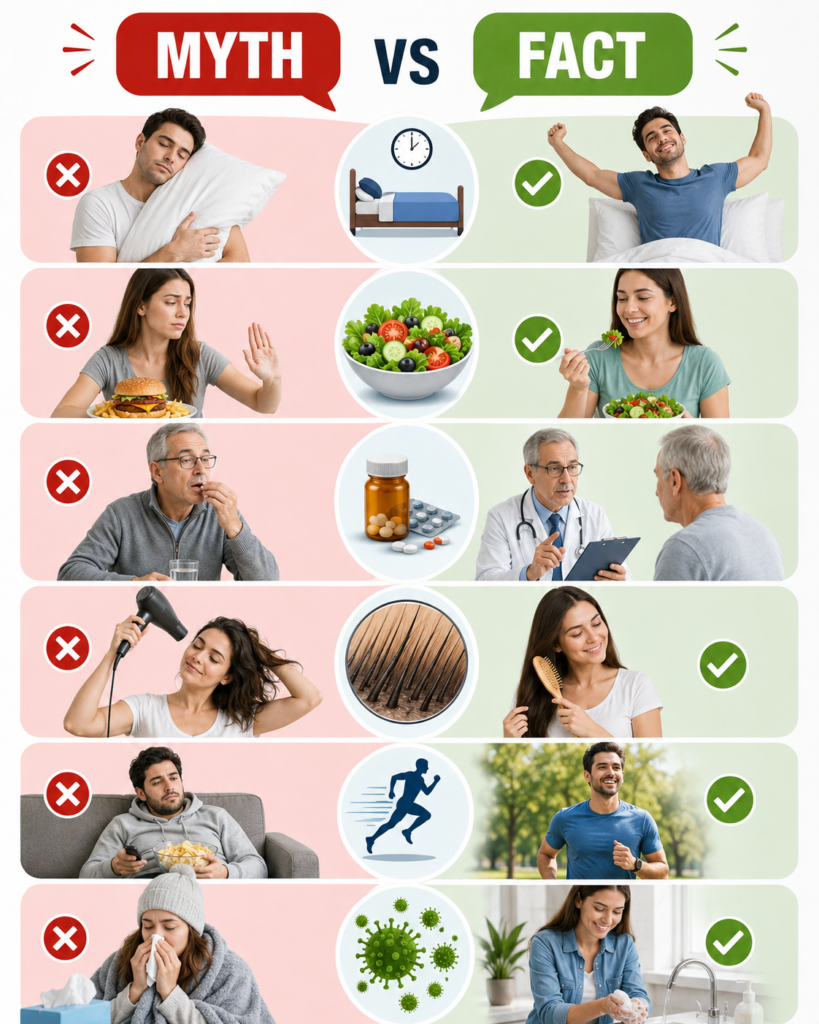
Common Health Myths Busted: Separating Facts from Fiction
Health information is widely available through the internet, social media, and word of mouth. While some advice is helpful, many common health myths continue to spread and can lead to confusion or unhealthy decisions. Believing inaccurate health information may delay proper medical care or encourage unsafe practices.
This guide debunks some of the most common health myths with evidence-based facts to help you make informed healthcare decisions.
Why Do Health Myths Spread?
Health myths often become popular because they are:
- Passed down through generations
- Shared on social media without verification
- Based on personal experiences rather than scientific evidence
- Oversimplified explanations of complex health conditions
- Misinterpretations of medical research
Relying on trusted healthcare professionals and evidence-based information is the best way to protect your health.
Myth 1: If You Feel Healthy, You Don’t Need Regular Health Checkups
Fact
Many conditions such as high blood pressure, diabetes, high cholesterol, liver disease, and certain cancers may not cause noticeable symptoms in their early stages.
Routine health checkups help detect diseases early, when treatment is often more effective.
Myth 2: Antibiotics Can Treat Viral Infections
Fact
Antibiotics work only against bacterial infections. They do not treat viral illnesses such as the common cold, influenza, or most sore throats.
Using antibiotics unnecessarily can contribute to antibiotic resistance and reduce their effectiveness when truly needed.
Myth 3: Drinking More Water Cures Every Health Problem
Fact
Staying hydrated is essential for good health, but drinking excessive amounts of water does not cure infections, chronic diseases, or other medical conditions.
Water supports normal body functions but is only one part of maintaining overall health.
Myth 4: Sugar Alone Causes Diabetes
Fact
Type 2 diabetes develops due to a combination of factors, including genetics, excess body weight, physical inactivity, and insulin resistance.
While consuming large amounts of added sugar may contribute to weight gain, diabetes has multiple risk factors.
Myth 5: Healthy People Don’t Get Heart Disease
Fact
Even people who appear healthy can develop heart disease due to family history, high cholesterol, high blood pressure, diabetes, smoking, or other risk factors.
Regular health screenings help identify hidden cardiovascular risks.
Myth 6: Vaccines Cause the Diseases They Prevent
Fact
Vaccines are carefully tested for safety and effectiveness. They help the immune system recognize and fight infections without causing the disease they are designed to prevent.
Vaccination has significantly reduced the spread of many serious infectious diseases worldwide.
Myth 7: All Fat Is Bad for Your Health
Fact
Healthy fats are an important part of a balanced diet.
Sources of healthy fats include:
- Nuts
- Seeds
- Avocados
- Olive oil
- Fatty fish
Limiting unhealthy trans fats and excessive saturated fats is generally recommended.
Myth 8: You Only Need Sunscreen on Sunny Days
Fact
Ultraviolet (UV) rays can affect the skin even on cloudy days.
Using sun protection regularly helps reduce the risk of sunburn, premature skin aging, and skin cancer.
Myth 9: Natural Remedies Are Always Safe
Fact
Natural or herbal products are not automatically safe for everyone.
Some herbal supplements may:
- Interact with medications
- Cause allergic reactions
- Affect liver or kidney function
- Be unsuitable during pregnancy
Always discuss supplements with your healthcare provider.
Myth 10: Mental Health Problems Are a Sign of Weakness
Fact
Mental health conditions are medical conditions that can affect anyone.
Seeking professional support is a positive step toward better health and recovery.
Myth 11: You Should Avoid Exercise When You Have Joint Pain
Fact
Appropriate physical activity often helps improve joint flexibility, muscle strength, and overall mobility.
Healthcare professionals may recommend specific exercises based on your condition.
Myth 12: More Vitamins Mean Better Health
Fact
Taking excessive vitamin supplements can sometimes be harmful.
Most people can obtain essential nutrients through a balanced diet. Supplements should be used when recommended by a healthcare professional.
Myth 13: You Can Tell If Someone Is Healthy Just by Looking at Them
Fact
Many chronic illnesses have no visible symptoms in the early stages.
Regular medical evaluations remain important regardless of outward appearance.
Myth 14: Sleeping Less Helps You Get More Done
Fact
Adequate sleep is essential for:
- Brain function
- Memory
- Immune health
- Heart health
- Emotional well-being
- Hormone regulation
Most adults benefit from 7–9 hours of quality sleep each night.
Myth 15: Chest Pain Always Means a Heart Attack
Fact
Chest pain can result from many causes, including muscle strain, acid reflux, lung conditions, anxiety, or heart disease.
However, chest pain should never be ignored and requires prompt medical evaluation, especially if accompanied by shortness of breath, sweating, or pain spreading to the arm or jaw.
How to Identify Reliable Health Information
To avoid misinformation:
- Consult qualified healthcare professionals
- Use trusted medical websites and government health resources
- Verify information before sharing it
- Avoid relying solely on social media posts
- Be cautious of miracle cures or products claiming instant results
Evidence-based healthcare decisions lead to better outcomes.
Why Preventive Healthcare Matters
Preventive healthcare helps:
- Detect diseases early
- Reduce complications
- Improve treatment outcomes
- Promote healthier lifestyles
- Lower long-term healthcare costs
- Enhance overall quality of life
Healthy habits combined with regular medical checkups are key to long-term wellness.
Frequently Asked Questions
Why are health myths so common?
Health myths often spread through social media, family traditions, and misinformation that lacks scientific evidence.
Is everything online about health accurate?
No. Health information online varies in quality. Always verify medical information with reliable sources and healthcare professionals.
Should I stop my medication if I read conflicting advice online?
No. Never stop or change prescribed medications without consulting your healthcare provider.
How can I protect myself from health misinformation?
Follow evidence-based medical advice, verify sources, and discuss health concerns with qualified healthcare professionals.
Conclusion
Health myths can lead to confusion, delayed treatment, and unnecessary health risks. Understanding the facts behind common misconceptions helps individuals make informed decisions about their well-being.
Staying informed through trusted medical guidance, maintaining healthy lifestyle habits, and attending regular health checkups are essential steps toward protecting your long-term health.