
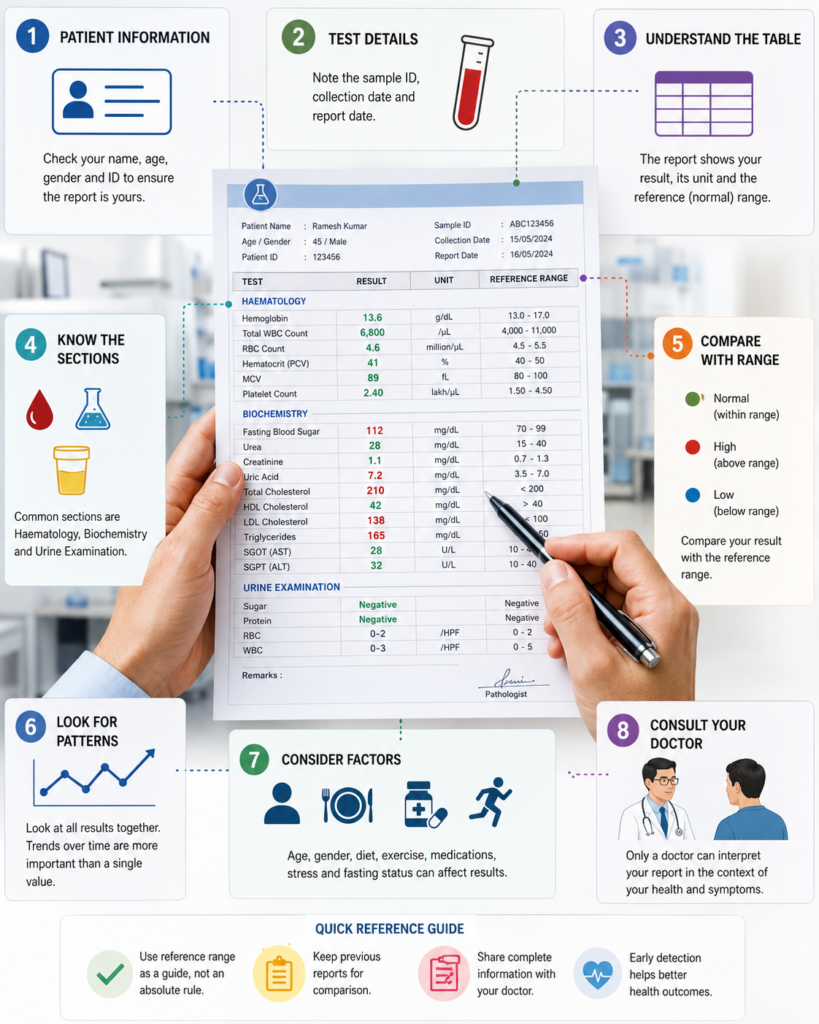
How to Read Blood Test Reports: A Complete Guide to Understanding Your Results
Blood tests are among the most common diagnostic tools used to assess your overall health. They help detect infections, nutritional deficiencies, organ function problems, chronic diseases, and many other medical conditions. While receiving a blood test report can sometimes be confusing, understanding the basics of your results can help you have more informed discussions with your healthcare provider.
This guide explains how to read blood test reports, common blood tests, what the results may indicate, and why professional medical interpretation is essential.
What Is a Blood Test?
A blood test is a laboratory examination of a blood sample collected from a vein or, in some cases, a finger prick. Blood tests measure different components of the blood to evaluate how well your body and organs are functioning.
Doctors may recommend blood tests as part of routine health checkups, disease diagnosis, treatment monitoring, or preventive healthcare.
Why Are Blood Tests Important?
Blood tests help healthcare professionals:
- Detect diseases early
- Monitor chronic medical conditions
- Assess liver and kidney function
- Evaluate heart health
- Identify infections
- Check nutritional status
- Measure blood sugar levels
- Monitor medication effects
- Assess hormone levels
- Detect inflammation in the body
Routine blood testing plays an important role in preventive healthcare.
Understanding the Basic Sections of a Blood Test Report
Most laboratory reports include:
Patient Information
This section contains your name, age, gender, laboratory identification number, and the date of testing.
Test Name
Each laboratory investigation is listed separately, such as:
- Complete Blood Count (CBC)
- Blood Glucose
- Lipid Profile
- Liver Function Test (LFT)
- Kidney Function Test (KFT)
- Thyroid Function Test (TFT)
Result
This column shows your measured value for each test.
Reference Range
The reference range represents the expected values for healthy individuals. Results slightly outside this range do not always indicate disease and should be interpreted in the context of your overall health.
Units
Each laboratory test is reported using standard measurement units, which may vary depending on the test and laboratory.
Common Blood Tests Explained
Complete Blood Count (CBC)
A CBC evaluates different types of blood cells.
It typically includes:
- Hemoglobin
- Red Blood Cell (RBC) count
- White Blood Cell (WBC) count
- Platelet count
- Hematocrit
- Mean Corpuscular Volume (MCV)
A CBC helps detect:
- Anemia
- Infections
- Inflammatory conditions
- Blood disorders
Blood Glucose Test
Blood glucose testing measures blood sugar levels.
It helps diagnose and monitor:
- Prediabetes
- Diabetes
- Blood sugar control
Doctors may recommend fasting blood sugar, post-meal blood sugar, or HbA1c testing depending on the clinical situation.
Lipid Profile
A lipid profile evaluates blood fats.
It generally includes:
- Total cholesterol
- LDL cholesterol
- HDL cholesterol
- Triglycerides
These results help assess cardiovascular disease risk.
Liver Function Test (LFT)
Liver function tests assess liver health by measuring:
- ALT
- AST
- Alkaline phosphatase (ALP)
- Bilirubin
- Albumin
- Total protein
Abnormal results may indicate liver inflammation, infection, bile duct disorders, or other liver conditions.
Kidney Function Test (KFT)
Kidney function tests evaluate how well the kidneys remove waste from the body.
Common measurements include:
- Creatinine
- Blood Urea Nitrogen (BUN)
- Estimated Glomerular Filtration Rate (eGFR)
- Electrolytes
These tests help detect kidney disease and monitor kidney function over time.
Thyroid Function Test (TFT)
Thyroid testing evaluates hormone levels such as:
- Thyroid Stimulating Hormone (TSH)
- Free T4
- Free T3
These tests help diagnose hypothyroidism, hyperthyroidism, and other thyroid disorders.
What Do High or Low Results Mean?
Blood test values outside the reference range do not always indicate a serious health problem.
Results may vary because of:
- Age
- Gender
- Pregnancy
- Medications
- Diet
- Hydration status
- Recent illness
- Exercise
- Laboratory methods
Your healthcare provider considers your symptoms, medical history, physical examination, and additional investigations before making a diagnosis.
How to Prepare for Blood Tests
Proper preparation improves the accuracy of many blood tests.
General recommendations include:
- Follow fasting instructions if required
- Drink adequate water unless advised otherwise
- Inform your doctor about all medications and supplements
- Avoid alcohol before certain tests
- Avoid strenuous exercise before specific investigations if instructed
- Attend your appointment at the recommended time
Always follow the instructions provided by your healthcare provider or laboratory.
Common Mistakes When Reading Blood Test Reports
Avoid these common misunderstandings:
- Interpreting a single abnormal value without medical advice
- Comparing results from different laboratories without considering reference ranges
- Ignoring symptoms despite “normal” results
- Assuming every abnormal value indicates serious disease
- Stopping or changing medications without consulting a doctor
- Searching online for a diagnosis based solely on laboratory numbers
Professional interpretation is always recommended.
When Should You Consult a Doctor?
Schedule a medical consultation if:
- Multiple test values are outside the reference range
- You have persistent symptoms despite normal results
- Your healthcare provider recommends follow-up testing
- You have chronic conditions requiring regular monitoring
- You notice significant changes compared to previous reports
Timely medical evaluation ensures appropriate diagnosis and treatment.
Benefits of Regular Blood Testing
Routine blood tests help:
- Detect diseases early
- Monitor treatment effectiveness
- Assess nutritional deficiencies
- Identify hidden medical conditions
- Support preventive healthcare
- Reduce the risk of complications through early intervention
Regular health screenings contribute to long-term wellness.
Frequently Asked Questions
Can I diagnose myself using a blood test report?
No. Blood test reports should always be interpreted by a qualified healthcare professional, who will consider your symptoms, medical history, physical examination, and other investigations.
Why are reference ranges different between laboratories?
Reference ranges may vary due to differences in laboratory equipment, testing methods, and population studies. Always use the reference range provided on your own laboratory report.
Do all blood tests require fasting?
No. Only certain tests, such as fasting blood glucose or some lipid profile tests, may require fasting. Follow the specific instructions given before your test.
How often should blood tests be done?
The frequency depends on your age, medical history, risk factors, and your healthcare provider’s recommendations. Many adults benefit from routine blood testing during annual health checkups.
Conclusion
Blood test reports provide valuable information about your overall health, but the numbers should never be interpreted in isolation. Understanding the purpose of common blood tests, reference ranges, and factors that influence results can help you participate more actively in your healthcare.
Regular health screenings, timely medical consultations, and professional interpretation of blood test reports are essential for early diagnosis, effective treatment, and maintaining long-term health.