
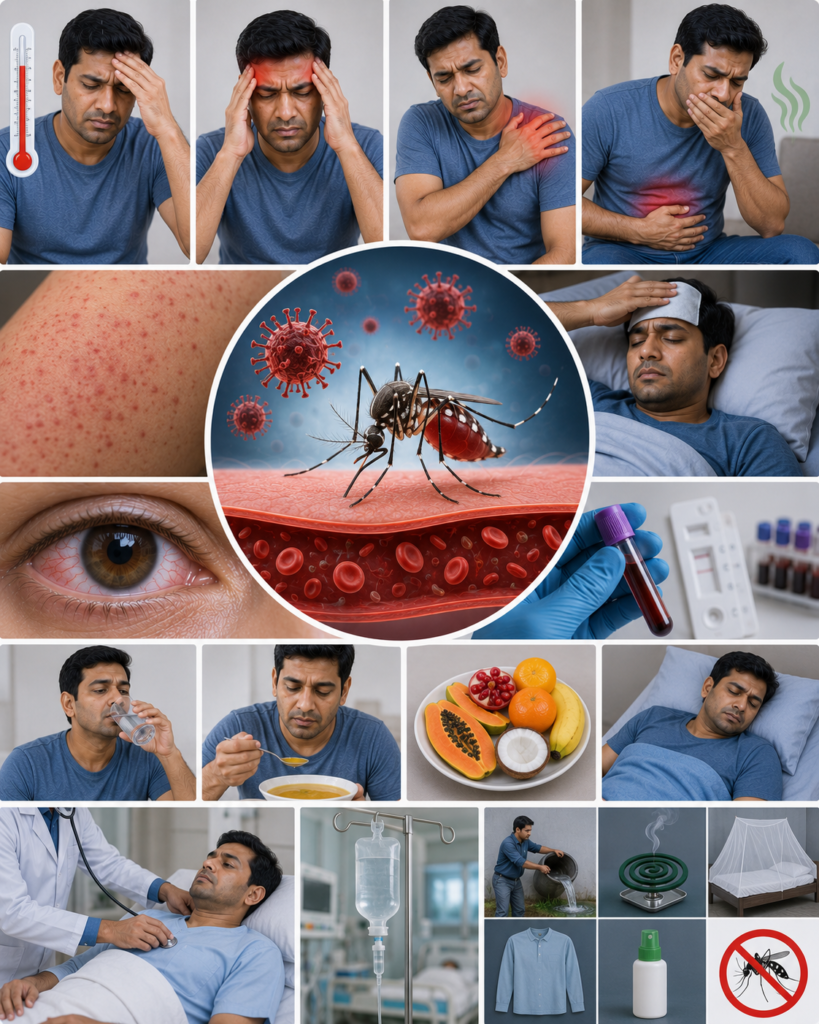
Dengue Symptoms and Treatment Guide – Early Signs, Diagnosis, Prevention, and Recovery
Dengue fever is a mosquito-borne viral infection that affects millions of people each year, especially in tropical and subtropical regions. It is transmitted through the bite of an infected Aedes mosquito, most commonly Aedes aegypti, which breeds in clean, stagnant water. While many people recover with proper care, severe dengue can become life-threatening if not recognized and treated promptly.
Understanding the symptoms, treatment options, warning signs, and preventive measures can help reduce complications and support a faster recovery.
What Is Dengue Fever?
Dengue is a viral illness caused by one of four dengue virus serotypes (DENV-1, DENV-2, DENV-3, and DENV-4). A person can become infected more than once because infection with one serotype does not provide lifelong protection against the others.
The disease ranges from mild fever to severe dengue, which can lead to bleeding, shock, and organ damage if not treated promptly.
How Does Dengue Spread?
Dengue spreads through the bite of an infected female Aedes mosquito.
The mosquito commonly:
- Bites during the daytime, especially early morning and late afternoon.
- Breeds in stagnant clean water found in containers, flower pots, water tanks, buckets, and discarded tires.
Dengue does not spread through casual contact, food, or drinking water.
Early Symptoms of Dengue
Symptoms usually develop 4 to 10 days after being bitten by an infected mosquito.
Common symptoms include:
- Sudden high fever
- Severe headache
- Pain behind the eyes
- Muscle pain
- Joint pain
- Body aches
- Fatigue
- Nausea
- Vomiting
- Skin rash
- Mild bleeding from the gums or nose in some cases
Many people describe dengue as causing intense muscle and joint pain, which is why it is sometimes referred to as “breakbone fever.”
Warning Signs of Severe Dengue
Severe dengue is a medical emergency and requires immediate hospital care.
Seek urgent medical attention if you experience:
- Severe abdominal pain
- Persistent vomiting
- Difficulty breathing
- Bleeding from the nose or gums
- Blood in vomit or stool
- Extreme weakness or restlessness
- Cold or clammy skin
- Reduced urine output
- Sudden drop in blood pressure
- Confusion or drowsiness
These warning signs often appear after the fever begins to improve, making close monitoring during recovery especially important.
Who Is at Higher Risk?
Certain individuals have a greater risk of developing severe dengue, including:
- Infants and young children
- Older adults
- Pregnant women
- People with weakened immune systems
- Individuals with chronic medical conditions
- People with a previous dengue infection
These groups should seek medical evaluation early if dengue is suspected.
How Is Dengue Diagnosed?
Doctors diagnose dengue based on symptoms, physical examination, and laboratory tests.
Common investigations include:
- Complete Blood Count (CBC)
- Platelet Count
- Hematocrit
- Dengue NS1 Antigen Test
- Dengue IgM and IgG Antibody Tests
- Liver Function Tests (when indicated)
Regular monitoring of platelet count and hematocrit may be recommended depending on the stage and severity of the illness.
Treatment for Dengue
There is no specific antiviral medication for dengue. Treatment focuses on relieving symptoms, maintaining hydration, and preventing complications.
Treatment may include:
- Adequate oral fluids
- Oral Rehydration Solution (ORS) if recommended
- Rest
- Paracetamol for fever and pain (only as advised by a healthcare professional)
- Intravenous fluids for patients with dehydration or severe dengue
- Hospital observation for patients with warning signs
Avoid taking medications such as aspirin or certain anti-inflammatory pain relievers unless specifically prescribed, as they may increase the risk of bleeding.
Home Care During Recovery
Most people with mild dengue recover within one to two weeks.
Helpful recovery measures include:
- Drink plenty of fluids.
- Eat light, nutritious meals.
- Get adequate rest.
- Monitor body temperature.
- Attend follow-up appointments if advised.
- Watch for warning signs, especially when the fever subsides.
Do not rely solely on platelet counts to judge recovery; your doctor will consider your overall clinical condition.
Can Dengue Be Prevented?
Preventing mosquito bites is the most effective way to reduce the risk of dengue.
Protect yourself by:
- Eliminating stagnant water around your home.
- Covering water storage containers.
- Using mosquito repellents.
- Wearing long-sleeved clothing and full-length pants.
- Installing window and door screens.
- Sleeping under mosquito nets when appropriate.
- Keeping surroundings clean and free from mosquito breeding sites.
Community participation is essential to control mosquito populations.
Possible Complications
If left untreated, severe dengue may lead to:
- Severe bleeding
- Dengue shock syndrome
- Organ failure
- Liver damage
- Fluid accumulation in the chest or abdomen
- Low blood pressure
- Death in severe cases
Timely medical care greatly reduces the risk of these complications.
When Should You See a Doctor?
Consult a healthcare professional immediately if you have:
- High fever lasting more than two days
- Severe headache with body pain
- Persistent vomiting
- Rash with fever
- Bleeding from the gums or nose
- Severe abdominal pain
- Difficulty breathing
- Extreme weakness
- Reduced urine output
Early evaluation helps ensure proper monitoring and treatment.
How Long Does Recovery Take?
Most individuals with uncomplicated dengue recover within 7 to 14 days. Fatigue and weakness may continue for several weeks after the infection has resolved.
Follow your doctor’s advice regarding hydration, nutrition, physical activity, and follow-up blood tests before returning to normal activities.
Tips to Reduce the Risk of Dengue
Simple preventive measures include:
- Remove standing water weekly.
- Keep water tanks tightly covered.
- Use mosquito repellents regularly.
- Wear protective clothing during the day.
- Maintain good household sanitation.
- Encourage community mosquito control efforts.
- Seek early medical care if fever develops during dengue season.
Conclusion
Dengue is a common mosquito-borne illness that can range from a mild fever to a serious medical emergency. Recognizing early symptoms such as high fever, severe headache, body pain, and rash—and being aware of warning signs like severe abdominal pain, persistent vomiting, and bleeding—can help ensure timely treatment. Most people recover fully with supportive care, adequate hydration, and medical monitoring. Preventing mosquito breeding and protecting yourself from mosquito bites remain the most effective ways to reduce the risk of dengue infection.