
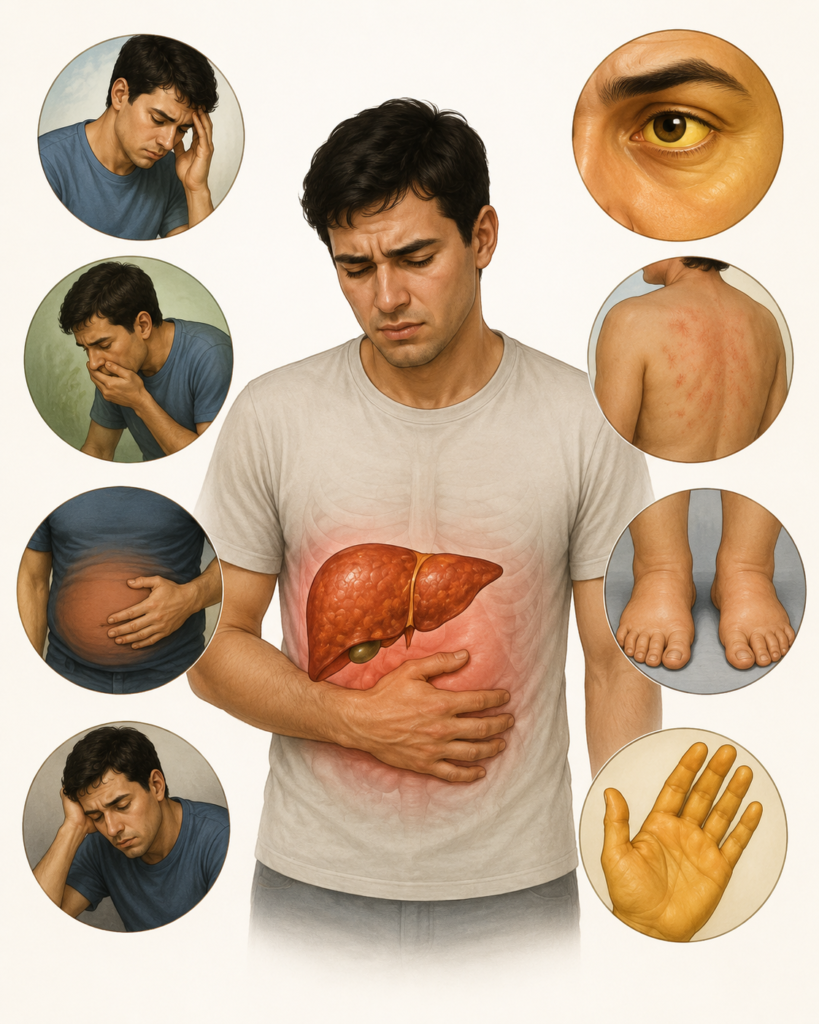
Liver Disease Symptoms: Early Warning Signs You Should Never Ignore
Liver disease can develop silently, with symptoms often appearing only after significant damage has occurred. Since the liver performs essential functions such as filtering toxins, producing bile, storing nutrients, and supporting digestion, maintaining liver health is vital for overall well-being. Recognizing the early signs of liver disease can help ensure timely diagnosis and treatment.
This guide explains the common symptoms, causes, risk factors, diagnosis, treatment options, and preventive measures to help you understand when it’s time to seek medical advice.
What Is Liver Disease?
Liver disease refers to any condition that affects the normal function of the liver. It may result from infections, excessive alcohol consumption, fatty liver disease, autoimmune disorders, genetic conditions, or long-term medication use.
When left untreated, liver disease may progress to liver fibrosis, cirrhosis, liver failure, or even liver cancer.
Common Symptoms of Liver Disease
Many liver conditions begin with mild symptoms that are easy to overlook. Common warning signs include:
- Persistent fatigue and weakness
- Loss of appetite
- Nausea or vomiting
- Unexplained weight loss
- Pain or discomfort in the upper right abdomen
- Yellowing of the skin and eyes (jaundice)
- Dark-colored urine
- Pale or clay-colored stools
- Swelling in the abdomen (ascites)
- Swelling in the legs and ankles
- Itchy skin
- Easy bruising or bleeding
- Confusion or difficulty concentrating in advanced stages
Early Signs That Should Not Be Ignored
Some symptoms may appear before serious liver damage develops:
- Constant tiredness
- Mild abdominal discomfort
- Reduced appetite
- Digestive problems
- Feeling full quickly
- Mild yellowing of the eyes
- Frequent itching without an obvious cause
Early evaluation can prevent disease progression.
Causes of Liver Disease
Several conditions can damage the liver, including:
- Fatty liver disease
- Viral hepatitis
- Excessive alcohol consumption
- Obesity
- Type 2 diabetes
- High cholesterol
- Autoimmune liver disorders
- Genetic liver diseases
- Long-term use of certain medications
- Exposure to harmful chemicals or toxins
Risk Factors
You may have a higher risk if you:
- Are overweight or obese
- Have diabetes
- Drink alcohol regularly
- Have chronic viral hepatitis
- Have a family history of liver disease
- Consume unhealthy foods frequently
- Lead a sedentary lifestyle
- Take medications without medical supervision
When Should You See a Doctor?
Consult a healthcare professional immediately if you experience:
- Yellow skin or eyes
- Severe abdominal pain
- Persistent vomiting
- Swollen abdomen
- Blood in vomit or stools
- Severe fatigue lasting several weeks
- Confusion or unusual drowsiness
Early medical attention greatly improves treatment outcomes.
How Is Liver Disease Diagnosed?
Doctors may recommend:
- Physical examination
- Liver function blood tests
- Complete blood count (CBC)
- Ultrasound of the liver
- CT scan or MRI
- FibroScan to assess liver stiffness
- Viral hepatitis screening
- Liver biopsy in selected cases
Early diagnosis helps identify the cause and determine the best treatment plan.
Treatment Options
Treatment depends on the underlying cause and stage of liver disease.
Common approaches include:
- Lifestyle modifications
- Weight management
- Healthy balanced diet
- Avoiding alcohol
- Medications for hepatitis or other liver conditions
- Managing diabetes and cholesterol
- Regular liver monitoring
- Advanced treatment for cirrhosis when necessary
- Liver transplantation in severe liver failure
Foods That Support Liver Health
A healthy diet plays an important role in protecting the liver.
Include:
- Fresh fruits
- Leafy green vegetables
- Whole grains
- Lean proteins
- Fish rich in omega-3 fatty acids
- Nuts and seeds
- Plenty of water
Limit:
- Fried foods
- Sugary beverages
- Processed foods
- Excess salt
- Alcohol
- Excessive saturated fats
Tips to Prevent Liver Disease
Protect your liver by following these healthy habits:
- Maintain a healthy weight
- Exercise regularly
- Eat a balanced diet
- Limit alcohol consumption
- Get vaccinated against hepatitis when appropriate
- Practice safe hygiene and safe injections
- Avoid unnecessary medications
- Do not self-medicate with herbal supplements without medical advice
- Control diabetes and cholesterol
- Schedule regular health checkups
Possible Complications
Untreated liver disease can lead to:
- Cirrhosis
- Portal hypertension
- Liver failure
- Internal bleeding
- Fluid accumulation
- Hepatic encephalopathy
- Liver cancer
Early diagnosis helps reduce the risk of these serious complications.
Frequently Asked Questions
Can liver disease develop without symptoms?
Yes. Many liver conditions remain silent for months or even years before noticeable symptoms appear.
Is fatty liver disease reversible?
In many cases, early-stage fatty liver disease can improve with weight loss, healthy eating, regular exercise, and proper medical care.
Does jaundice always indicate liver disease?
Not always. Jaundice can result from several medical conditions, but it should always be evaluated by a healthcare professional.
Can liver disease be prevented?
Many forms of liver disease can be prevented through healthy lifestyle choices, vaccination against hepatitis, avoiding excessive alcohol, and managing chronic medical conditions.
Conclusion
The liver is one of the body’s most important organs, and even mild symptoms should not be ignored. Fatigue, jaundice, abdominal discomfort, swelling, or changes in urine and stool color may indicate underlying liver disease. Early diagnosis, healthy lifestyle changes, and appropriate medical care can prevent complications and improve long-term liver health.
If you notice persistent symptoms or have risk factors for liver disease, consult a qualified healthcare professional for a thorough evaluation and timely treatment.