
LASIK Surgery Explained: A Complete Guide to Laser Vision Correction
LASIK surgery has become one of the most popular and effective procedures for correcting vision problems and reducing dependence on glasses or contact lenses. Millions of people worldwide have undergone LASIK to improve their eyesight and quality of life. Understanding how LASIK works, who is eligible, its benefits, risks, and recovery process can help individuals make informed decisions about vision correction. This comprehensive guide by MaduraiDoctors explains everything you need to know about LASIK surgery.
What Is LASIK Surgery?
LASIK, which stands for Laser-Assisted In Situ Keratomileusis, is a type of refractive eye surgery that uses laser technology to reshape the cornea. The cornea is the clear front surface of the eye responsible for focusing light onto the retina.
By reshaping the cornea, LASIK helps correct common vision problems and improves the eye’s ability to focus clearly.
What Vision Problems Can LASIK Treat?
LASIK surgery is commonly used to correct several refractive errors.
Nearsightedness (Myopia)
People with myopia can see nearby objects clearly but have difficulty seeing distant objects.
Farsightedness (Hyperopia)
People with hyperopia may have difficulty focusing on nearby objects.
Astigmatism
Astigmatism occurs when the cornea has an irregular shape, causing blurred or distorted vision.
In some cases, LASIK can correct combinations of these vision problems.
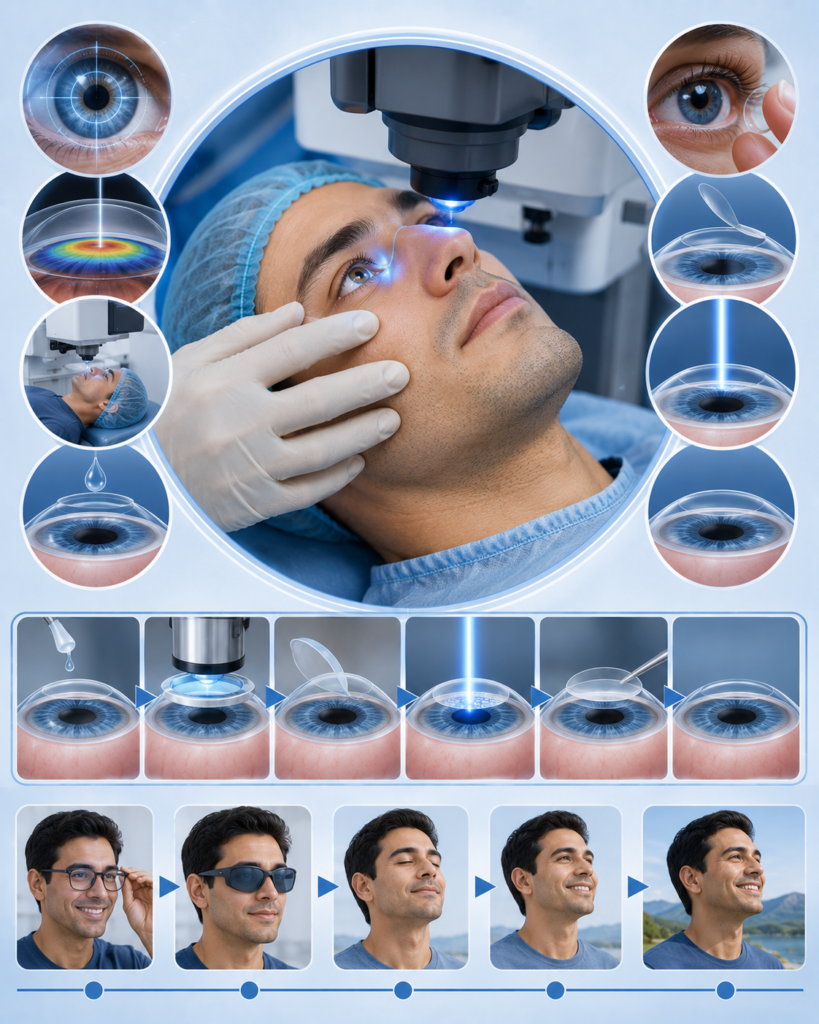
How Does LASIK Surgery Work?
LASIK surgery reshapes the cornea using advanced laser technology.
The procedure generally involves:
- Applying numbing eye drops.
- Creating a thin flap in the cornea.
- Lifting the flap to expose the underlying tissue.
- Using a laser to reshape the cornea.
- Repositioning the flap to allow natural healing.
The procedure is typically performed on both eyes during the same session and usually takes only a short time.
Who Is a Good Candidate for LASIK?
Not everyone is suitable for LASIK surgery. Ideal candidates generally include individuals who:
- Are adults with stable vision
- Have healthy eyes
- Have refractive errors within treatable ranges
- Have adequate corneal thickness
- Do not have active eye infections or severe eye diseases
A comprehensive eye examination is necessary to determine eligibility.
Who May Not Be Suitable for LASIK?
Certain conditions may make LASIK unsuitable or require additional evaluation.
These may include:
- Unstable vision prescriptions
- Severe dry eyes
- Thin corneas
- Advanced glaucoma
- Certain retinal disorders
- Active eye infections
- Some autoimmune conditions
- Pregnancy-related vision changes
An eye specialist can recommend the most appropriate treatment option.
Types of LASIK Procedures
Conventional LASIK
Traditional LASIK uses specialized instruments and laser technology to reshape the cornea.
Blade-Free LASIK
This technique uses laser technology to create the corneal flap without a surgical blade.
Customized LASIK
Customized treatments are tailored to the individual’s unique eye characteristics for more personalized correction.
Preparing for LASIK Surgery
Before the procedure, patients typically undergo:
Comprehensive Eye Examination
The eye specialist evaluates:
- Vision prescription
- Corneal thickness
- Eye health
- Tear production
- Pupil size
Medical History Review
A complete review of medical conditions and medications helps determine surgical suitability.
Preoperative Instructions
Patients may receive instructions regarding:
- Contact lens use
- Eye care preparation
- Medication adjustments
- Postoperative planning
What Happens During LASIK Surgery?
The LASIK procedure is generally quick and painless.
The process usually includes:
- Administration of numbing eye drops
- Gentle positioning of the eye
- Creation of the corneal flap
- Laser reshaping of the cornea
- Repositioning of the corneal flap
Most patients experience minimal discomfort during the procedure.
Recovery After LASIK Surgery
Recovery is usually rapid, with many individuals noticing improved vision within a short period.
Common recovery recommendations include:
- Using prescribed eye drops
- Avoiding eye rubbing
- Wearing protective eye shields if advised
- Limiting strenuous activities temporarily
- Attending follow-up appointments
Vision may continue to stabilize over several weeks.
Benefits of LASIK Surgery
LASIK offers several potential advantages, including:
- Improved vision clarity
- Reduced dependence on glasses
- Reduced need for contact lenses
- Quick recovery
- Long-lasting results for many patients
- Improved convenience and quality of life
Many patients achieve significant improvements in their daily visual function.
Possible Side Effects and Risks
Although LASIK is generally considered safe, all surgical procedures carry some risks.
Temporary side effects may include:
- Dry eyes
- Glare around lights
- Halos
- Light sensitivity
- Fluctuating vision
- Mild discomfort
Less common complications may include:
- Infection
- Corneal problems
- Under-correction or over-correction
- Persistent visual symptoms
A thorough preoperative evaluation helps minimize these risks.
How Long Do LASIK Results Last?
For many individuals, LASIK results remain stable for many years. However, natural age-related changes in vision can still occur over time.
Some people may eventually require:
- Reading glasses due to aging
- Additional vision correction procedures
- Eyeglasses for certain activities
Alternatives to LASIK Surgery
For individuals who are not suitable candidates for LASIK, other options may be available.
These include:
Photorefractive Keratectomy (PRK)
A laser vision correction procedure that does not involve creating a corneal flap.
Implantable Lenses
Specialized lenses implanted inside the eye to correct vision.
Prescription Glasses
Eyeglasses remain a safe and effective vision correction option.
Contact Lenses
Modern contact lenses can effectively correct many vision problems.
Frequently Asked Questions About LASIK
Is LASIK surgery painful?
LASIK is generally not painful because numbing eye drops are used during the procedure.
How long does the procedure take?
The procedure itself is usually completed within a relatively short period.
Can both eyes be treated on the same day?
Yes, LASIK is commonly performed on both eyes during the same session.
Is LASIK permanent?
The corneal changes made during LASIK are permanent, although age-related vision changes can still occur.
When Should You Consult an Eye Specialist?
Consider consulting an eye care professional if you:
- Want to reduce dependence on glasses or contact lenses
- Have stable vision
- Experience difficulties with contact lens use
- Are interested in refractive surgery options
- Want to determine whether LASIK is appropriate for your eyes
A professional evaluation can help identify the safest and most effective treatment option.
Conclusion
LASIK surgery has transformed vision correction by offering an effective solution for many individuals with refractive errors. Understanding the procedure, eligibility criteria, benefits, risks, and recovery process is essential when considering laser vision correction.
This comprehensive MaduraiDoctors guide explains the key aspects of LASIK surgery and highlights the importance of proper evaluation and professional consultation. If you are considering LASIK or other vision correction procedures, consult a qualified eye care specialist to determine the best approach for your individual visual needs and long-term eye health.