
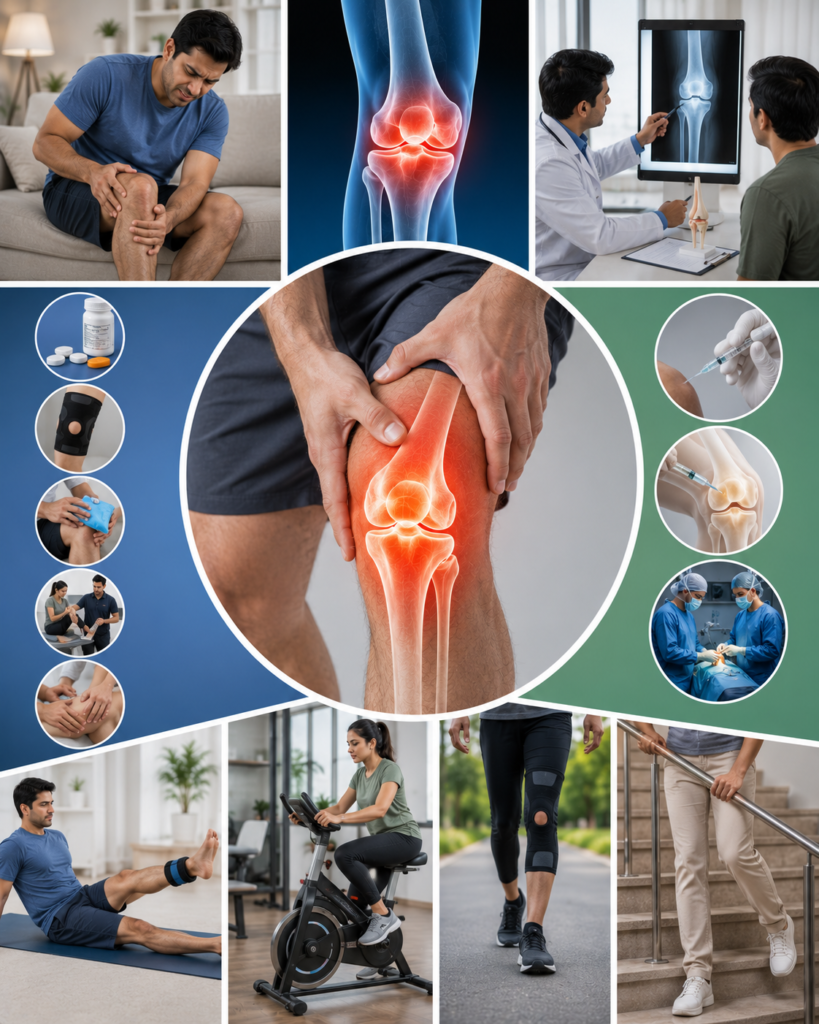
Knee Pain Treatment Options: Causes, Symptoms, Diagnosis, and Effective Care
Knee pain is one of the most common musculoskeletal complaints affecting people of all ages. Whether it results from an injury, arthritis, overuse, or an underlying medical condition, knee pain can interfere with walking, climbing stairs, exercising, and performing everyday activities.
Fortunately, many cases of knee pain improve with appropriate treatment, lifestyle changes, and rehabilitation. Understanding the available treatment options can help individuals manage pain, improve mobility, and protect long-term joint health.
What Is Knee Pain?
Knee pain refers to discomfort in or around the knee joint. The knee is a complex joint made up of bones, cartilage, ligaments, tendons, and muscles that work together to support movement and body weight.
Pain may develop suddenly after an injury or gradually due to wear and tear or chronic conditions.
Common Causes of Knee Pain
Several conditions can lead to knee pain, including:
Osteoarthritis
Osteoarthritis is one of the most common causes of chronic knee pain. It occurs when the cartilage protecting the knee gradually wears away, leading to pain, stiffness, and reduced movement.
Ligament Injuries
Sports injuries or accidents can damage important knee ligaments, including:
- Anterior cruciate ligament (ACL)
- Posterior cruciate ligament (PCL)
- Medial collateral ligament (MCL)
- Lateral collateral ligament (LCL)
These injuries may cause swelling, instability, and difficulty walking.
Meniscus Tear
The meniscus acts as a cushion between the thigh bone and shin bone. A tear may occur during twisting movements or with age-related degeneration.
Tendinitis
Inflammation of the tendons around the knee can develop due to repetitive activities such as running, jumping, or frequent kneeling.
Bursitis
Inflammation of the small fluid-filled sacs (bursae) around the knee may cause swelling and pain.
Rheumatoid Arthritis
This autoimmune condition causes inflammation in the joints, leading to pain, stiffness, and swelling.
Gout
Gout occurs when uric acid crystals accumulate in joints, causing sudden episodes of severe pain and swelling.
Risk Factors
Certain factors increase the likelihood of knee pain:
- Increasing age
- Obesity
- Previous knee injury
- Sports participation
- Weak muscles
- Poor flexibility
- Occupations requiring prolonged standing or kneeling
- Arthritis
- Lack of regular exercise
Maintaining a healthy lifestyle may help reduce these risks.
Common Symptoms
Symptoms vary depending on the underlying condition.
They may include:
- Knee pain during movement
- Swelling
- Stiffness
- Warmth around the joint
- Redness
- Difficulty walking
- Limited range of motion
- Clicking or popping sounds
- Feeling that the knee may “give way”
- Pain while climbing stairs
Persistent or worsening symptoms should be evaluated by a healthcare professional.
How Knee Pain Is Diagnosed
Diagnosis usually includes:
- Medical history
- Physical examination
- Assessment of knee movement
- Evaluation of swelling and tenderness
Depending on the symptoms, additional investigations may include:
- X-rays
- MRI scans
- Ultrasound
- Blood tests for inflammatory conditions
Accurate diagnosis helps guide the most appropriate treatment.
Home Care for Mild Knee Pain
Many mild cases improve with simple self-care measures.
Helpful strategies include:
- Rest the affected knee.
- Apply an ice pack for 15–20 minutes several times daily during the first 48 hours after an injury.
- Elevate the leg to reduce swelling.
- Use a compression bandage if recommended.
- Avoid activities that worsen pain.
Gradually return to normal activities as symptoms improve.
Physical Therapy
Physical therapy is often a key part of recovery.
A physiotherapist may recommend exercises to:
- Strengthen thigh muscles
- Improve flexibility
- Increase joint stability
- Improve balance
- Restore normal movement
Regular rehabilitation can reduce pain and prevent future injuries.
Medications
Depending on the cause, a healthcare professional may prescribe or recommend:
- Pain-relieving medications
- Anti-inflammatory medicines
- Topical pain relief gels or creams
Always follow medical advice regarding medication use and avoid self-medicating for prolonged periods.
Lifestyle Changes That Support Knee Health
Healthy habits can reduce stress on the knee joint.
These include:
- Maintaining a healthy body weight
- Exercising regularly
- Wearing supportive footwear
- Warming up before physical activity
- Avoiding sudden increases in exercise intensity
- Taking breaks during repetitive activities
Small lifestyle changes can significantly improve long-term joint function.
Exercises That May Help
Gentle exercises can improve knee strength and flexibility.
Examples include:
- Straight leg raises
- Quadriceps strengthening exercises
- Hamstring stretches
- Heel slides
- Stationary cycling
- Swimming
- Walking on level ground
Exercises should be performed under professional guidance if pain is significant or persistent.
Medical Procedures
For individuals with severe or persistent knee pain, additional treatments may be considered.
These may include:
- Joint injections
- Arthroscopic procedures
- Ligament reconstruction
- Cartilage repair procedures
- Knee replacement surgery in advanced cases
The appropriate option depends on the diagnosis, age, activity level, and overall health.
When to See a Doctor
Seek medical evaluation if you experience:
- Severe knee pain
- Swelling that does not improve
- Inability to bear weight
- Knee deformity
- Persistent pain lasting several weeks
- Recurrent knee instability
- Fever with joint swelling
- Reduced range of motion
Early treatment can help prevent further joint damage.
Seek Emergency Medical Care If
Immediate medical attention is required if:
- The knee appears severely deformed.
- You cannot stand or walk after an injury.
- There is severe bleeding from the knee.
- You experience sudden numbness or loss of movement.
- A high fever occurs along with severe knee swelling and redness.
These symptoms may indicate a serious injury or infection.
Tips to Prevent Knee Pain
Reduce the risk of knee problems by:
- Maintaining a healthy weight.
- Exercising regularly.
- Strengthening leg muscles.
- Stretching before and after exercise.
- Wearing appropriate footwear.
- Avoiding overuse injuries.
- Using proper techniques during sports.
- Increasing exercise intensity gradually.
Prevention is often the best long-term strategy for healthy joints.
Daily Knee Care Checklist
Support healthy knees by:
- Staying physically active.
- Performing strengthening exercises.
- Stretching regularly.
- Maintaining a healthy weight.
- Wearing supportive shoes.
- Avoiding prolonged kneeling.
- Taking breaks during repetitive activities.
- Using correct lifting techniques.
- Eating a balanced diet.
- Seeking medical advice if symptoms persist.
Conclusion
Knee pain can result from injuries, arthritis, overuse, or other medical conditions, but many people experience significant improvement with early diagnosis, appropriate treatment, and healthy lifestyle changes. Physical therapy, weight management, regular exercise, and medical care when necessary can help relieve pain, restore mobility, and improve quality of life. If knee pain is severe, persistent, or accompanied by swelling, instability, or difficulty walking, prompt medical evaluation is recommended for accurate diagnosis and effective treatment.