
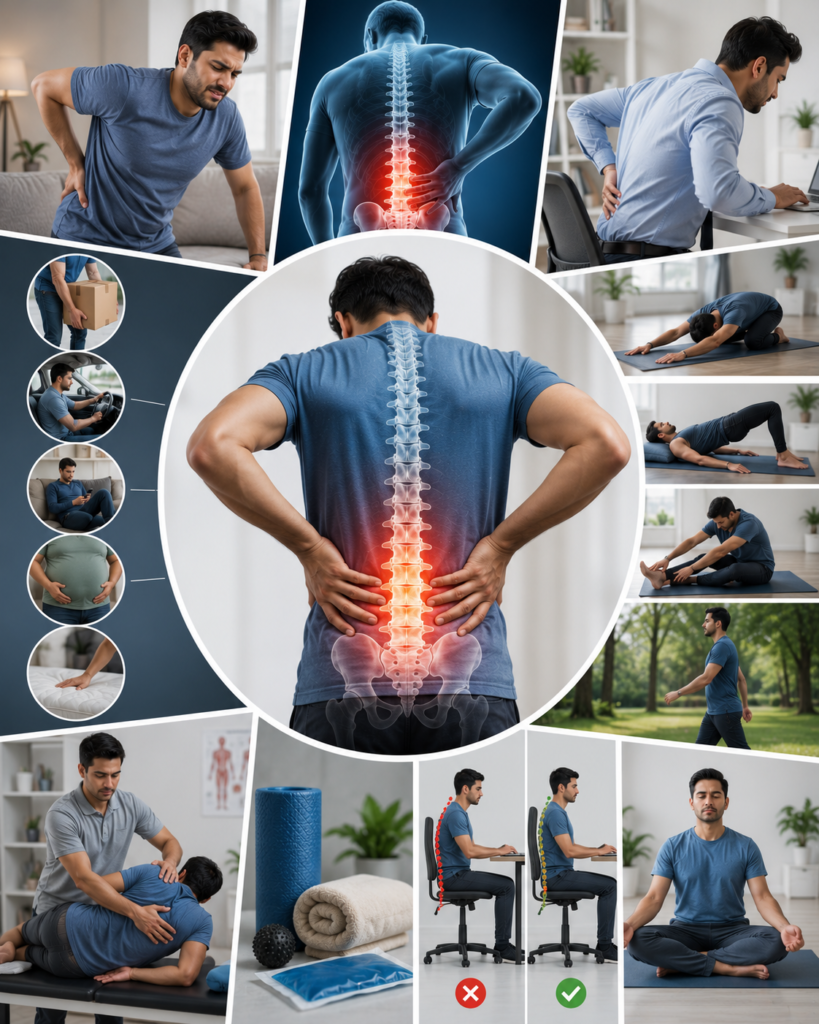
Back Pain: Causes and Remedies – A Complete Guide to Prevention and Relief
Back pain is one of the most common health problems affecting people of all ages. It can range from a mild ache to severe pain that limits movement and daily activities. While most cases improve with proper self-care and lifestyle changes, some may require medical evaluation and treatment.
Understanding the causes of back pain, recognizing warning signs, and adopting healthy habits can help reduce discomfort and prevent future episodes.
What Is Back Pain?
Back pain refers to discomfort that occurs anywhere along the spine, including the neck, upper back, middle back, or lower back. Lower back pain is the most common type and is a leading cause of reduced mobility and missed workdays worldwide.
Back pain may be:
- Acute (lasting less than six weeks)
- Subacute (lasting six to twelve weeks)
- Chronic (lasting more than twelve weeks)
The duration and severity often depend on the underlying cause.
Common Causes of Back Pain
Back pain can result from a variety of conditions and lifestyle factors.
Muscle or Ligament Strain
Overstretching muscles or lifting heavy objects incorrectly can strain the muscles and ligaments supporting the spine.
Common causes include:
- Heavy lifting
- Sudden twisting movements
- Poor posture
- Overuse during physical activity
Poor Posture
Sitting or standing with poor posture for long periods places extra stress on the spine and surrounding muscles.
Examples include:
- Slouching while sitting
- Improper workstation setup
- Looking down at mobile devices for extended periods
Herniated or Slipped Disc
The discs between the bones of the spine act as cushions. When a disc bulges or ruptures, it may press on nearby nerves and cause pain, numbness, or weakness.
Arthritis
Osteoarthritis can affect the joints of the spine, leading to stiffness, pain, and reduced mobility.
Osteoporosis
Weak and brittle bones caused by osteoporosis increase the risk of spinal fractures, particularly in older adults.
Injuries
Falls, sports injuries, and road traffic accidents can damage muscles, ligaments, bones, or spinal structures.
Medical Conditions
Certain medical conditions may also contribute to back pain, including:
- Kidney infections
- Kidney stones
- Spinal infections
- Some inflammatory conditions
- Certain cancers involving the spine
A healthcare professional can help determine the underlying cause.
Risk Factors
Several factors increase the likelihood of developing back pain:
- Increasing age
- Obesity
- Lack of regular exercise
- Sedentary lifestyle
- Smoking
- Heavy physical work
- Pregnancy
- Poor lifting techniques
- Chronic stress
Reducing modifiable risk factors may lower the chance of recurring back pain.
Common Symptoms
Symptoms vary depending on the cause and severity.
They may include:
- Dull aching pain
- Sharp or stabbing pain
- Muscle stiffness
- Pain that worsens with movement
- Reduced flexibility
- Difficulty standing upright
- Pain radiating into the buttocks or legs
- Tingling or numbness
- Muscle weakness
Persistent or worsening symptoms should be medically evaluated.
Home Remedies for Mild Back Pain
Many cases of mild back pain improve with simple self-care.
Helpful measures include:
- Rest briefly, but avoid prolonged bed rest.
- Apply a warm compress or heating pad after the first day or two.
- Use a cold pack during the first 24–48 hours if the pain follows an injury.
- Stay gently active with light walking.
- Avoid lifting heavy objects until symptoms improve.
If pain continues beyond a few days or worsens, consult a healthcare professional.
Exercises That May Help
Gentle exercise can strengthen the muscles supporting the spine and improve flexibility.
Examples include:
- Walking
- Pelvic tilts
- Cat-cow stretch
- Knee-to-chest stretch
- Hamstring stretches
- Core strengthening exercises
Exercise should be performed carefully and stopped if it causes significant pain.
Improve Your Posture
Maintaining good posture helps reduce strain on the back.
Tips include:
- Sit with your back supported.
- Keep both feet flat on the floor.
- Position computer screens at eye level.
- Avoid sitting continuously for long periods.
- Take regular movement breaks.
Good ergonomics can prevent recurring back discomfort.
Maintain a Healthy Weight
Excess body weight places additional pressure on the spine and joints.
Healthy weight management through balanced nutrition and regular physical activity can help reduce back pain and improve mobility.
Sleep in a Comfortable Position
Proper sleeping posture supports spinal alignment.
Helpful suggestions include:
- Use a supportive mattress.
- Sleep on your side with a pillow between your knees.
- If sleeping on your back, place a pillow under your knees.
- Avoid sleeping on your stomach if it worsens pain.
Quality sleep also supports recovery.
Medical Treatment for Back Pain
Treatment depends on the underlying cause and severity.
A healthcare professional may recommend:
- Pain-relieving medications
- Physical therapy
- Stretching and strengthening programs
- Lifestyle modifications
- Treatment of underlying medical conditions
Some individuals with severe structural problems or persistent symptoms may require additional specialist evaluation.
When to See a Doctor
Consult a healthcare professional if you experience:
- Back pain lasting more than a few weeks
- Severe pain that does not improve with rest
- Pain that radiates down one or both legs
- Numbness or tingling
- Muscle weakness
- Fever with back pain
- Unexplained weight loss
- Pain after a fall or accident
Early diagnosis can help prevent complications.
Seek Emergency Medical Care If
Immediate medical attention is required if back pain is associated with:
- Loss of bladder or bowel control
- Severe weakness in the legs
- Sudden inability to walk
- Numbness around the groin or buttocks
- Severe injury following an accident
These symptoms may indicate a serious spinal condition requiring urgent treatment.
Tips to Prevent Back Pain
Reduce your risk of future back pain by:
- Exercising regularly.
- Strengthening your core muscles.
- Maintaining good posture.
- Lifting objects correctly by bending the knees.
- Maintaining a healthy weight.
- Avoiding smoking.
- Taking regular breaks from prolonged sitting.
- Using ergonomic furniture when possible.
- Sleeping on a supportive mattress.
- Staying physically active.
Daily Back Care Checklist
Follow these healthy habits every day:
- Stretch regularly.
- Walk or exercise.
- Sit with good posture.
- Lift safely.
- Stay hydrated.
- Maintain a healthy weight.
- Sleep well.
- Avoid prolonged sitting.
- Strengthen core muscles.
- Seek medical advice if pain persists.
Conclusion
Back pain is a common condition that often improves with proper self-care, regular exercise, good posture, and healthy lifestyle habits. Understanding the underlying causes and recognizing warning signs can help prevent long-term complications. If back pain is severe, persistent, or accompanied by symptoms such as numbness, weakness, or loss of bladder or bowel control, prompt medical evaluation is essential. Early diagnosis and appropriate treatment can improve recovery, restore mobility, and enhance overall quality of life.