
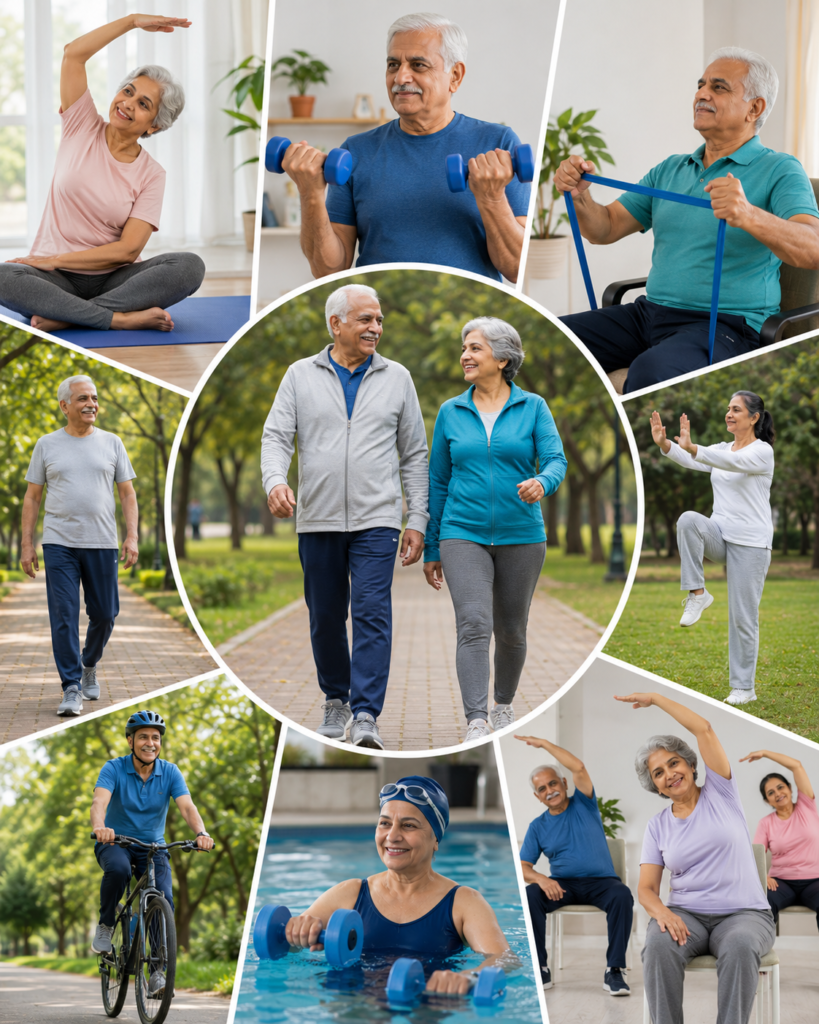
Exercise Tips for Seniors: Safe Ways to Stay Active and Healthy
Regular physical activity is one of the most effective ways for older adults to maintain good health, independence, and quality of life. As we age, the body naturally experiences changes in muscle strength, bone density, balance, and flexibility. Fortunately, consistent exercise can slow these changes and help seniors stay active for longer.
This guide provides safe and practical exercise tips for seniors, helping improve strength, mobility, balance, and overall well-being.
Why Exercise Is Important for Seniors
Regular exercise offers numerous physical and mental health benefits for older adults. Staying active can help:
- Improve heart health
- Strengthen muscles and bones
- Enhance balance and coordination
- Reduce the risk of falls
- Improve flexibility and mobility
- Support healthy body weight
- Lower blood pressure
- Improve blood sugar control
- Reduce joint stiffness
- Enhance mood and mental well-being
- Improve sleep quality
- Promote independent living
Even moderate daily activity can make a significant difference in overall health.
Start Slowly and Progress Gradually
If you have not exercised regularly, begin with low-intensity activities and gradually increase the duration and intensity.
Helpful tips include:
- Start with 10–15 minutes of activity.
- Increase exercise time gradually.
- Listen to your body’s signals.
- Avoid pushing through pain.
- Take rest days when needed.
Consistency is more important than intensity.
Warm Up Before Every Workout
A proper warm-up prepares the body for exercise and reduces the risk of injury.
Simple warm-up activities include:
- Gentle walking
- Shoulder rolls
- Neck movements
- Arm circles
- Ankle rotations
- Gentle leg stretches
Spend about 5–10 minutes warming up before exercising.
Include Aerobic Exercise
Aerobic activities improve heart and lung function while increasing endurance.
Suitable options include:
- Brisk walking
- Cycling on a stationary bike
- Swimming
- Water aerobics
- Dancing
- Low-impact aerobics
Aim for regular moderate-intensity aerobic activity based on your health status and your healthcare provider’s advice.
Strength Training Is Essential
Muscle strength naturally decreases with age, making resistance exercises important.
Strength-building activities include:
- Bodyweight exercises
- Resistance bands
- Light dumbbells
- Chair squats
- Wall push-ups
- Step-ups
Strength training helps maintain muscle mass, improve posture, and support daily activities.
Improve Balance to Reduce Falls
Balance exercises can lower the risk of falls and improve confidence during daily movements.
Examples include:
- Standing on one foot while holding a stable surface
- Heel-to-toe walking
- Side leg raises
- Tai Chi
- Chair-supported balance exercises
Practice balance exercises several times each week if appropriate.
Stretch Regularly
Stretching improves flexibility and reduces muscle stiffness.
Focus on stretching:
- Hamstrings
- Calves
- Shoulders
- Chest
- Back
- Hips
Hold each stretch gently without bouncing and avoid overstretching.
Stay Hydrated During Exercise
Older adults may not always recognize thirst.
Drink water:
- Before exercise
- During longer sessions
- After finishing activity
Wear lightweight clothing and avoid exercising in extreme heat.
Exercise Safely
Follow these important safety tips:
- Wear supportive footwear.
- Exercise on stable, non-slip surfaces.
- Use assistive devices if needed.
- Avoid sudden movements.
- Stop immediately if you experience chest pain, severe dizziness, or shortness of breath.
Safety should always come first.
Listen to Your Body
It is normal to experience mild muscle soreness when starting a new exercise routine, but exercise should not cause severe pain.
Reduce intensity or seek medical advice if you experience:
- Persistent joint pain
- Swelling
- Severe fatigue
- Dizziness
- Chest discomfort
- Irregular heartbeat
Combine Exercise with Healthy Nutrition
Physical activity works best when paired with a nutritious diet.
Include:
- Fresh fruits
- Vegetables
- Whole grains
- Lean protein
- Low-fat dairy
- Healthy fats
- Adequate water
Protein-rich foods help support muscle maintenance after exercise.
Mental Health Benefits of Exercise
Regular physical activity supports emotional well-being by:
- Reducing stress
- Improving mood
- Supporting memory and concentration
- Lowering anxiety
- Reducing symptoms of depression
- Encouraging social interaction through group activities
Exercise benefits both the body and the mind.
Exercise Tips for Seniors with Chronic Conditions
Many older adults live with conditions such as diabetes, arthritis, osteoporosis, or heart disease.
General recommendations include:
- Follow your healthcare provider’s advice.
- Choose low-impact exercises.
- Monitor blood sugar if you have diabetes.
- Avoid activities that worsen pain.
- Take prescribed medications regularly.
- Increase activity gradually.
An individualized exercise plan may be beneficial for people with chronic health conditions.
When to Consult a Doctor Before Exercising
Seek medical advice before starting a new exercise program if you have:
- Heart disease
- Uncontrolled high blood pressure
- Diabetes with complications
- Severe arthritis
- Osteoporosis with fractures
- Chronic lung disease
- Recent surgery
- Frequent dizziness or fainting
A healthcare professional can recommend exercises that are appropriate for your health and fitness level.
Daily Exercise Checklist for Seniors
Follow these healthy habits:
- Warm up before exercise.
- Walk regularly.
- Perform strength exercises.
- Practice balance training.
- Stretch after workouts.
- Drink enough water.
- Wear proper footwear.
- Eat a balanced diet.
- Get adequate sleep.
- Stay physically active every day.
Conclusion
Regular exercise is one of the best investments seniors can make for their health. A combination of aerobic activity, strength training, balance exercises, and stretching can improve mobility, reduce the risk of falls, strengthen the heart, and enhance overall quality of life. By staying active safely and consistently, older adults can maintain independence and enjoy healthier aging for years to come.