
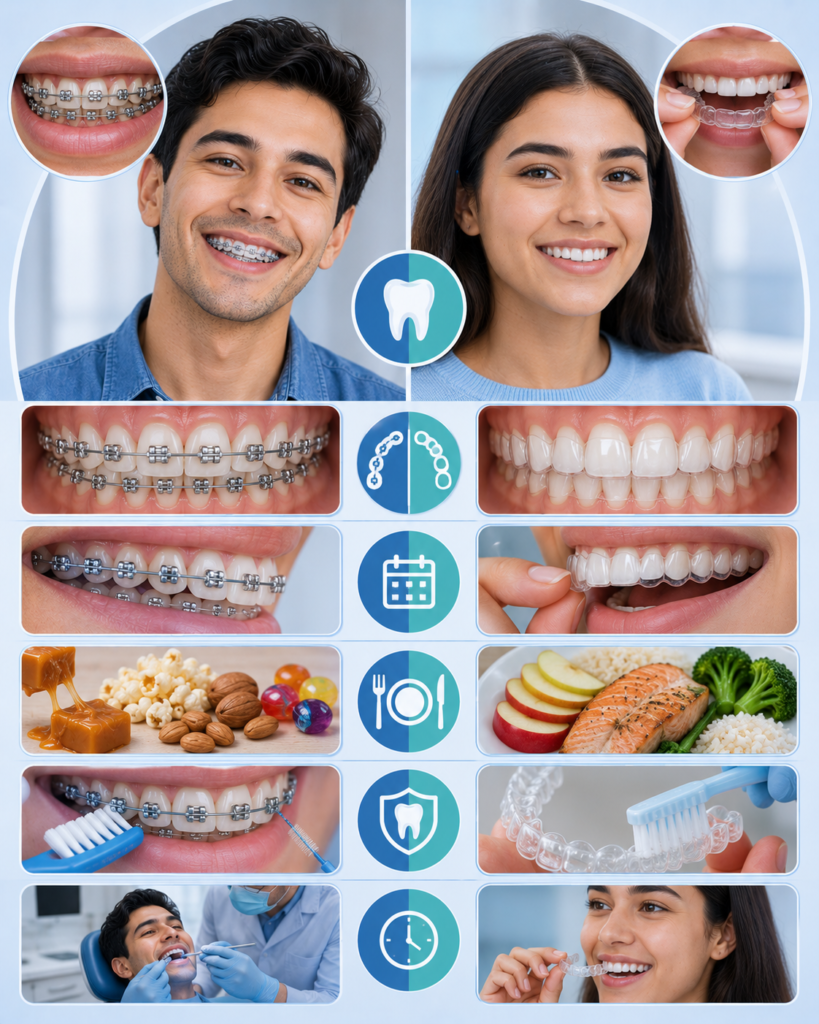
Braces vs Aligners Comparison: Which Orthodontic Treatment Is Right for You?
Orthodontic treatment has evolved significantly over the years, providing patients with multiple options to achieve a healthier, straighter smile. Traditional braces and clear aligners are two of the most common methods used to correct dental alignment problems. Understanding the differences, benefits, limitations, and suitability of each treatment option can help patients make informed decisions. This comprehensive guide by MaduraiDoctors explains the key differences between braces and aligners.
What Are Braces?
Braces are orthodontic devices that use brackets, wires, and bands to gradually move teeth into their proper positions. They have been used successfully for decades to treat a wide range of dental alignment problems.
Traditional braces remain one of the most effective orthodontic treatment options available.
What Are Clear Aligners?
Clear aligners are removable, transparent trays designed to gradually shift teeth into their desired positions. Patients typically wear a series of customized aligners over the course of treatment.
Clear aligners have become increasingly popular because of their appearance and convenience.
Common Dental Problems Treated by Braces and Aligners
Both treatment options can address several orthodontic issues, including:
- Crooked teeth
- Gaps between teeth
- Overcrowding
- Overbite
- Underbite
- Crossbite
- Open bite
- Mild to moderate alignment problems
The suitability of each treatment depends on the complexity of the case.
Braces vs Aligners: Quick Comparison
Note: Higher values indicate greater advantage in that specific category.
How Do Braces Work?
Braces apply continuous pressure to gradually move teeth into proper alignment.
Components of braces include:
- Brackets attached to the teeth
- Archwires connecting the brackets
- Elastic bands when needed
Periodic adjustments help guide tooth movement throughout treatment.
How Do Aligners Work?
Clear aligners use a series of customized trays that apply controlled pressure to the teeth.
Patients typically:
- Wear aligners for most of the day
- Change to a new set of aligners periodically
- Attend regular follow-up appointments
Each set of aligners gradually shifts the teeth toward their final position.
Advantages of Braces
Traditional braces offer several benefits.
Effective for Complex Cases
Braces can successfully treat:
- Severe crowding
- Significant bite problems
- Complex tooth movements
- Advanced orthodontic conditions
Continuous Treatment
Since braces remain attached to the teeth, treatment progresses continuously.
Suitable for Most Patients
Braces can be used in children, adolescents, and adults.
Predictable Results
They have a long history of successful treatment outcomes.
Disadvantages of Braces
Some challenges associated with braces include:
- Greater visibility
- Temporary discomfort after adjustments
- Difficulty cleaning around brackets
- Dietary restrictions
- Potential irritation of cheeks and gums
Advantages of Clear Aligners
Clear aligners offer several attractive features.
Nearly Invisible Appearance
The transparent design makes aligners less noticeable.
Removable Convenience
Patients can remove aligners for:
- Eating
- Brushing
- Flossing
- Special occasions
Improved Comfort
Clear aligners generally have smooth surfaces that reduce irritation.
Easier Oral Hygiene
Because aligners are removable, maintaining oral hygiene may be more convenient.
Disadvantages of Clear Aligners
Clear aligners also have limitations.
Requires Patient Compliance
Successful treatment depends on wearing aligners consistently.
May Not Be Suitable for Complex Cases
Some severe orthodontic problems may require traditional braces.
Requires Careful Maintenance
Aligners must be cleaned regularly and handled properly.
Temporary Speech Changes
Some patients experience minor speech adjustments initially.
Appearance Comparison
Braces
- Highly visible
- Available in metal and less noticeable options
- Some patients personalize braces with colored bands
Aligners
- Nearly invisible
- Preferred by many adults and older teenagers
- Minimal effect on appearance during treatment
Comfort Comparison
Both treatments may cause temporary discomfort as teeth move.
Braces
Patients may experience:
- Pressure after adjustments
- Irritation from brackets or wires
- Temporary soreness
Aligners
Patients may experience:
- Mild pressure when switching trays
- Initial adjustment discomfort
- Less soft tissue irritation
Treatment Duration
The duration of orthodontic treatment varies depending on individual factors.
Factors influencing treatment time include:
- Severity of misalignment
- Patient age
- Treatment compliance
- Type of orthodontic problem
A dental professional can provide a personalized estimate.
Oral Hygiene During Treatment
Braces
Patients should:
- Brush carefully around brackets
- Floss regularly
- Attend routine dental cleanings
Aligners
Patients can remove aligners for:
- Brushing
- Flossing
- Routine oral care
This often makes oral hygiene easier to maintain.
Dietary Considerations
Braces
Patients may need to avoid:
- Hard foods
- Sticky foods
- Chewy foods
- Foods that can damage brackets
Aligners
Patients can generally eat their normal diet after removing the aligners.
Follow-Up Visits
Both treatment methods require regular monitoring.
Braces
Periodic adjustments are necessary throughout treatment.
Aligners
Regular checkups ensure proper tooth movement and treatment progress.
Which Option Is Better for Adults?
Many adults prefer clear aligners because of their discreet appearance and convenience. However, traditional braces may still be the best option for more complex orthodontic problems.
The ideal choice depends on:
- Treatment goals
- Dental condition
- Lifestyle preferences
- Professional recommendations
Which Option Is Better for Teenagers?
Both braces and aligners can be effective for teenagers.
Factors to consider include:
- Treatment complexity
- Ability to follow instructions
- Lifestyle habits
- Oral hygiene practices
How to Choose Between Braces and Aligners
When choosing an orthodontic treatment, consider:
- Severity of dental problems
- Appearance preferences
- Lifestyle needs
- Oral hygiene habits
- Commitment to treatment instructions
- Professional recommendations
A comprehensive orthodontic evaluation is essential for selecting the most appropriate option.
Frequently Asked Questions
Are braces more effective than aligners?
For certain complex cases, braces may provide greater treatment flexibility. Both options can be highly effective when appropriately selected.
Are aligners completely invisible?
Clear aligners are designed to be discreet, but they may still be slightly noticeable.
Can adults get braces?
Yes, orthodontic treatment is suitable for adults of various ages.
Which treatment is more comfortable?
Many patients find aligners more comfortable due to the absence of brackets and wires.
Conclusion
Both braces and clear aligners are effective orthodontic treatment options that can improve dental alignment, oral function, and appearance. The best choice depends on individual dental conditions, lifestyle preferences, and treatment goals.
This comprehensive MaduraiDoctors guide highlights the key differences between braces and aligners to help patients make informed decisions. Consulting a qualified dental professional or orthodontic specialist is the best way to determine the most suitable treatment plan for achieving a healthy and confident smile.
Braces vs Aligners Comparison
General comparison of common orthodontic treatment features.
| feature | braces | aligners |
|---|---|---|
| Visibility | 2 | 5 |
| Comfort | 3 | 5 |
| Removability | 1 | 5 |
| Complex Cases | 5 | 3 |
| Oral Hygiene Ease | 2 | 5 |