
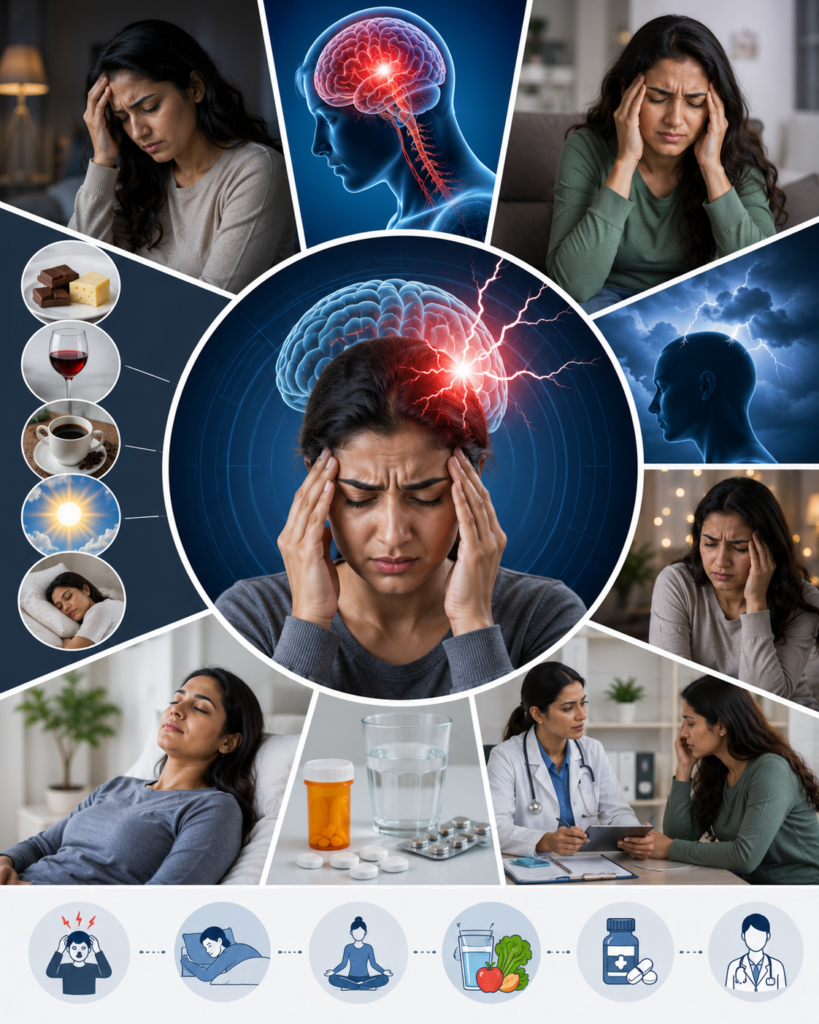
Migraine Causes and Treatment: Understanding Symptoms, Triggers, and Management
Migraine is more than just a headache. It is a neurological condition that can cause intense, recurring headaches along with symptoms such as nausea, sensitivity to light and sound, and visual disturbances. Migraine attacks can last for hours or even days, affecting work, school, and daily activities.
Although migraines can be challenging to live with, early diagnosis, proper treatment, and lifestyle changes can help reduce the frequency and severity of attacks. Understanding migraine causes and treatment options is an important step toward better symptom control and improved quality of life.
What Is a Migraine?
A migraine is a neurological disorder characterized by repeated episodes of moderate to severe headache, often affecting one side of the head. The pain is usually throbbing or pulsating and may worsen with physical activity.
Some people experience warning signs, known as an aura, before the headache begins. Others may have migraine attacks without an aura.
Common Symptoms of Migraine
Migraine symptoms can vary from person to person and may occur in different stages.
Headache Symptoms
- Moderate to severe throbbing headache
- Pain on one side of the head, although both sides can be affected
- Headache that worsens with movement
- Pain lasting from a few hours to several days
Other Symptoms
- Nausea
- Vomiting
- Sensitivity to light
- Sensitivity to sound
- Sensitivity to strong smells
- Blurred vision
- Dizziness
- Fatigue
- Difficulty concentrating
Migraine Aura
Some people experience neurological symptoms before or during a migraine attack, including:
- Flashing lights
- Blind spots
- Zigzag lines in vision
- Tingling or numbness in the face or hands
- Temporary difficulty speaking
Aura symptoms usually develop gradually and often resolve before the headache begins.
What Causes Migraine?
The exact cause of migraine is not fully understood, but it is believed to involve changes in brain activity, nerve signaling, and blood vessels.
Several factors may trigger migraine attacks.
Common Migraine Triggers
- Emotional stress
- Lack of sleep
- Oversleeping
- Skipping meals
- Dehydration
- Hormonal changes
- Bright lights
- Loud noises
- Strong odors
- Weather changes
- Certain foods
- Excess caffeine
- Alcohol
- Some medications
Triggers differ from person to person, making it useful to identify individual patterns.
Risk Factors
Certain factors increase the likelihood of developing migraines, including:
- Family history of migraine
- Female sex, particularly due to hormonal fluctuations
- Young adulthood or middle age
- Chronic stress
- Anxiety or depression
- Poor sleep habits
Having these risk factors does not mean a person will definitely develop migraines, but they may increase susceptibility.
How Migraine Is Diagnosed
A healthcare professional usually diagnoses migraine based on:
- Medical history
- Description of symptoms
- Frequency and duration of headaches
- Family history
- Physical and neurological examination
If symptoms are unusual or suggest another condition, additional investigations such as brain imaging or blood tests may be recommended.
Treatment for Migraine
Treatment aims to relieve symptoms during an attack and reduce the frequency of future episodes.
Medications for Acute Migraine
Depending on the severity of symptoms, treatment may include:
- Pain-relieving medications
- Anti-nausea medications
- Migraine-specific prescription medicines
Medications should only be taken as directed by a qualified healthcare professional.
Preventive Medications
People with frequent or severe migraines may benefit from preventive treatment.
Preventive medications may be considered when migraines:
- Occur frequently
- Significantly affect daily life
- Do not respond well to acute treatment
- Cause prolonged or severe symptoms
The choice of medication depends on individual health needs.
Lifestyle Changes That Help Prevent Migraines
Healthy daily habits can reduce migraine frequency in many individuals.
Helpful strategies include:
- Maintain a regular sleep schedule.
- Eat balanced meals without skipping breakfast or other meals.
- Stay well hydrated.
- Exercise regularly.
- Manage stress effectively.
- Limit excessive caffeine.
- Avoid smoking.
- Limit alcohol consumption.
- Identify and avoid personal migraine triggers.
Consistency is often key to migraine prevention.
Keep a Migraine Diary
Recording migraine episodes can help identify triggers and improve treatment.
Track:
- Date and time of the headache
- Duration
- Pain severity
- Foods eaten
- Sleep patterns
- Stress levels
- Menstrual cycle (if applicable)
- Medications taken
A migraine diary provides valuable information during medical consultations.
Home Care During a Migraine Attack
During an attack, some people find relief by:
- Resting in a quiet, dark room
- Drinking water to stay hydrated
- Applying a cool compress to the forehead
- Avoiding bright lights and loud sounds
- Taking prescribed medication early in the attack
These measures may reduce discomfort and support recovery.
When to See a Doctor
Consult a healthcare professional if you experience:
- Frequent migraine attacks
- Severe headaches that interfere with daily activities
- Headaches that are becoming more frequent or more severe
- Headaches that do not improve with prescribed treatment
- New headache symptoms after the age of 50
- Persistent nausea or vomiting with headaches
Early medical evaluation can help confirm the diagnosis and guide effective treatment.
Seek Emergency Medical Care If
Immediate medical attention is required if a headache is accompanied by:
- Sudden, severe headache unlike previous headaches
- Confusion
- Loss of consciousness
- Difficulty speaking
- Weakness or numbness on one side of the body
- Seizures
- Vision loss
- High fever with neck stiffness
These symptoms may indicate a serious medical emergency and should not be ignored.
Daily Migraine Prevention Checklist
Adopt these healthy habits:
- Sleep 7–9 hours every night.
- Drink enough water.
- Eat regular, balanced meals.
- Exercise consistently.
- Manage stress with relaxation techniques.
- Limit caffeine and alcohol.
- Avoid known migraine triggers.
- Take medications as prescribed.
- Maintain a migraine diary.
- Schedule regular medical follow-ups if migraines are frequent.
Conclusion
Migraine is a common neurological condition that can significantly affect daily life, but it is manageable with the right approach. Recognizing symptoms early, understanding personal triggers, following healthy lifestyle habits, and seeking appropriate medical treatment can help reduce migraine frequency and severity. If headaches become frequent, severe, or are associated with unusual symptoms, prompt medical evaluation is essential for accurate diagnosis and effective care.