
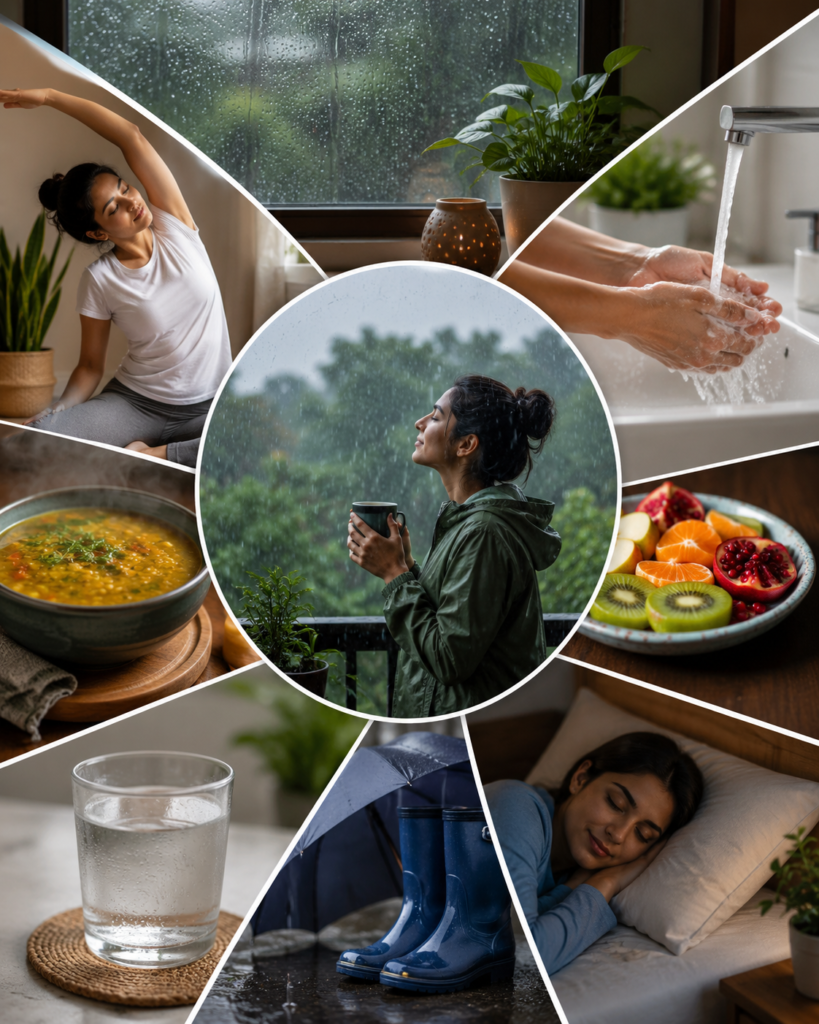
Monsoon Health Tips: Stay Healthy During the Rainy Season
The monsoon season brings pleasant weather and much-needed rainfall, but it also increases the risk of infections, seasonal illnesses, and waterborne diseases. Changes in temperature, humidity, and water contamination create ideal conditions for bacteria, viruses, and mosquitoes to thrive. Following simple monsoon health tips can help protect you and your family throughout the rainy season.
Why Health Risks Increase During Monsoon
Rainwater accumulation, high humidity, and fluctuating temperatures contribute to the spread of many illnesses. Drinking contaminated water, consuming unhygienic food, and mosquito breeding are among the leading causes of monsoon-related health problems.
Children, older adults, pregnant women, and people with weakened immune systems should be especially cautious during this season.
Common Monsoon Diseases
Some of the most common illnesses during the rainy season include:
- Viral fever
- Common cold and cough
- Influenza
- Dengue fever
- Malaria
- Typhoid
- Cholera
- Gastroenteritis
- Food poisoning
- Leptospirosis
- Skin fungal infections
Early recognition of symptoms allows timely medical care and faster recovery.
Essential Monsoon Health Tips
Drink Safe Water
Always consume clean and purified drinking water. Boil water if necessary and avoid drinking from unknown sources. Safe hydration helps prevent waterborne infections.
Wash Hands Frequently
Wash your hands thoroughly with soap and water before eating, after using the restroom, and after returning home from outside. Good hand hygiene significantly reduces the spread of germs.
Eat Fresh and Hygienic Food
Choose freshly cooked meals instead of stale or uncovered food. Wash fruits and vegetables properly before consumption and avoid raw or undercooked foods.
Strengthen Your Immunity
A balanced diet rich in fruits, vegetables, whole grains, lean proteins, and healthy fats supports the immune system. Foods rich in Vitamin C, zinc, and antioxidants may help the body fight infections.
Stay Hydrated
People often drink less water during rainy weather. Maintaining adequate hydration supports digestion, circulation, and overall health.
Prevent Mosquito Breeding
Empty containers that collect rainwater, keep water tanks covered, and maintain clean surroundings. Use mosquito repellents, protective clothing, and mosquito nets, especially during early morning and evening hours.
Wear Clean and Dry Clothes
Wet clothing and footwear can increase the risk of fungal skin infections. Dry yourself thoroughly after getting wet in the rain and wear breathable fabrics.
Maintain Personal Hygiene
Daily bathing, trimming nails, and keeping feet dry help reduce bacterial and fungal infections during humid weather.
Exercise Regularly
Indoor workouts, stretching, yoga, or light exercises help improve circulation and strengthen immunity when outdoor activities are limited.
Get Adequate Sleep
Quality sleep supports immune function and helps the body recover from daily stress, reducing susceptibility to seasonal illnesses.
Foods to Include During Monsoon
Healthy seasonal foods can help maintain good immunity.
- Citrus fruits
- Guava
- Apples
- Pomegranate
- Carrots
- Spinach
- Ginger
- Garlic
- Turmeric
- Curd (if tolerated)
- Soups
- Herbal teas
- Nuts and seeds
Freshly prepared home-cooked meals are generally safer than street food during the rainy season.
Foods to Avoid
To reduce the risk of stomach infections and food poisoning:
- Uncovered street food
- Raw salads from unknown sources
- Cut fruits sold outside
- Stale leftovers
- Excessively oily foods
- Sugary beverages
- Unpasteurized dairy products
- Contaminated drinking water
Protect Children During Monsoon
Children are more vulnerable to seasonal infections.
Parents should:
- Encourage regular handwashing.
- Ensure children drink clean water.
- Dress them in dry clothing after rain.
- Keep vaccinations up to date.
- Prevent mosquito bites using age-appropriate protection.
- Seek medical attention if fever persists.
Monsoon Care for Older Adults
Older adults may have weaker immunity and chronic health conditions.
They should:
- Continue prescribed medications.
- Monitor blood pressure and blood sugar regularly.
- Stay warm and dry.
- Eat nutritious meals.
- Avoid exposure to stagnant water.
- Consult a healthcare professional if symptoms develop.
Warning Signs That Need Medical Attention
Seek medical evaluation if you experience:
- High fever lasting more than two days
- Severe headache
- Persistent vomiting
- Difficulty breathing
- Chest pain
- Severe dehydration
- Blood in stools
- Continuous diarrhea
- Extreme weakness
- Skin rashes with fever
- Reduced urine output
Prompt diagnosis can prevent serious complications.
Simple Daily Monsoon Health Checklist
- Drink purified water.
- Eat freshly cooked food.
- Wash hands regularly.
- Sleep 7–8 hours.
- Exercise daily.
- Wear clean, dry clothes.
- Eliminate stagnant water.
- Use mosquito protection.
- Keep your surroundings clean.
- Monitor symptoms and seek timely medical advice when necessary.
Conclusion
The rainy season can be enjoyable when accompanied by healthy habits and proper precautions. Safe drinking water, nutritious food, good hygiene, mosquito control, and early attention to symptoms can significantly reduce the risk of seasonal illnesses. By following these practical monsoon health tips, individuals and families can stay healthy and enjoy the season with greater peace of mind.