
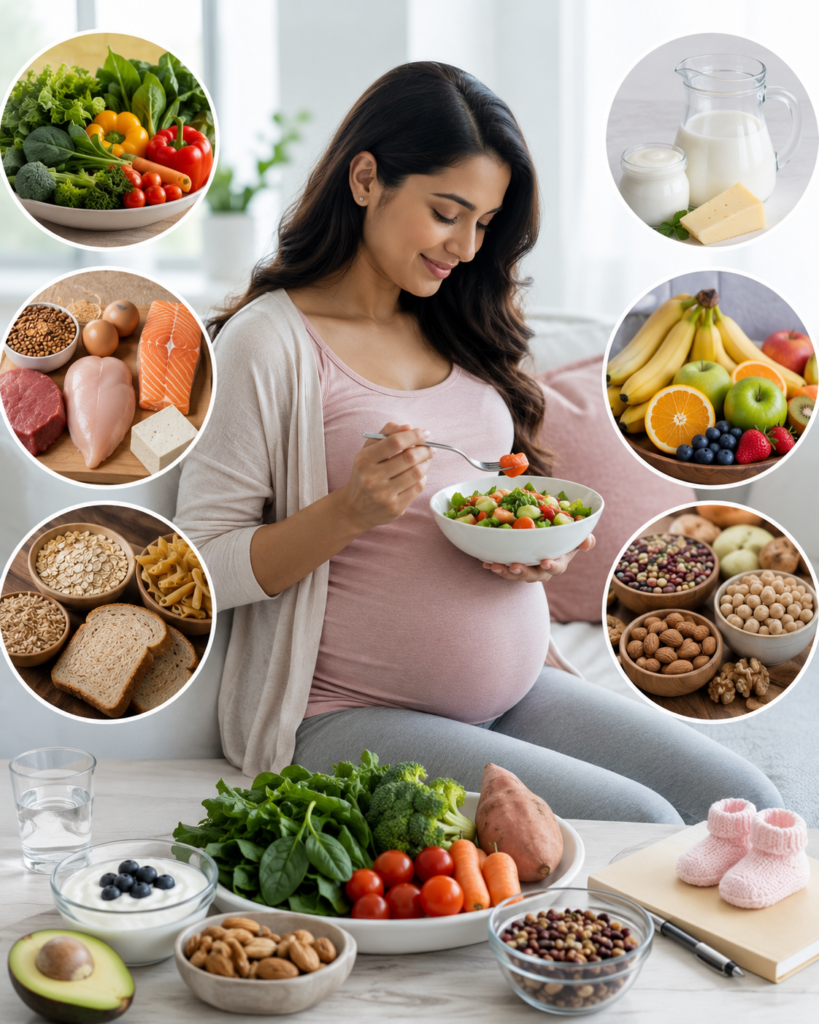
Pregnancy Diet Guide: Healthy Nutrition for Every Stage of Pregnancy
A healthy diet during pregnancy is essential for the well-being of both the mother and the developing baby. Proper nutrition supports fetal growth, helps maintain the mother’s health, and reduces the risk of pregnancy-related complications. Eating a balanced variety of nutrient-rich foods throughout pregnancy can contribute to a healthier pregnancy and a smoother recovery after childbirth.
This guide explains the importance of a pregnancy diet, essential nutrients, recommended foods, foods to avoid, and healthy eating tips.
Why is a Healthy Pregnancy Diet Important?
During pregnancy, the body’s nutritional needs increase to support the baby’s development and the mother’s changing body. A balanced diet helps:
- Support healthy fetal growth and development
- Maintain maternal energy levels
- Promote healthy weight gain
- Strengthen the immune system
- Support brain and bone development in the baby
- Reduce the risk of nutritional deficiencies
- Help lower the risk of certain pregnancy complications
- Prepare the body for breastfeeding
Essential Nutrients During Pregnancy
1. Folic Acid
Folic acid is important during early pregnancy as it supports the development of the baby’s brain and spinal cord.
Good sources include:
- Spinach
- Broccoli
- Lentils
- Beans
- Citrus fruits
- Fortified cereals
2. Iron
Iron helps produce healthy red blood cells and reduces the risk of iron-deficiency anemia.
Iron-rich foods include:
- Lean meat
- Fish (low in mercury)
- Eggs
- Green leafy vegetables
- Beans
- Dates
- Fortified cereals
3. Calcium
Calcium supports the baby’s developing bones and teeth while maintaining the mother’s bone health.
Sources include:
- Milk
- Yogurt
- Cheese
- Tofu
- Sesame seeds
- Almonds
- Leafy green vegetables
4. Protein
Protein is essential for the growth of fetal tissues and maternal muscle health.
Healthy protein sources include:
- Eggs
- Fish
- Chicken
- Lentils
- Beans
- Dairy products
- Nuts
- Seeds
5. Vitamin D
Vitamin D supports calcium absorption and healthy bone development.
Sources include:
- Fortified dairy products
- Egg yolks
- Fatty fish
- Safe sunlight exposure
6. Omega-3 Fatty Acids
Omega-3 fats contribute to healthy brain and eye development in the baby.
Sources include:
- Salmon
- Sardines
- Walnuts
- Chia seeds
- Flaxseeds
Healthy Foods to Include During Pregnancy
Aim for a balanced diet that includes:
- Fresh fruits
- Seasonal vegetables
- Whole grains
- Brown rice
- Oats
- Whole wheat products
- Lean proteins
- Low-fat dairy products
- Nuts and seeds
- Healthy oils in moderation
- Plenty of water
Foods to Limit or Avoid
Certain foods may increase the risk of foodborne illness or contain substances that are not recommended during pregnancy.
Avoid or limit:
- Raw or undercooked meat
- Raw seafood
- Unpasteurized milk and dairy products
- Raw eggs
- Processed meats unless thoroughly cooked
- High-mercury fish
- Excess caffeine
- Alcohol
- Tobacco products
- Highly processed foods high in sugar, salt, and unhealthy fats
Healthy Eating Tips During Pregnancy
Follow these practical tips for a healthy pregnancy:
- Eat small, frequent meals if nausea is present.
- Include protein in every meal.
- Stay well hydrated by drinking enough water.
- Choose whole foods over processed snacks.
- Wash fruits and vegetables thoroughly.
- Do not skip breakfast.
- Include a variety of colorful fruits and vegetables.
- Follow your healthcare provider’s advice regarding prenatal vitamins.
- Maintain recommended weight gain based on medical guidance.
Managing Common Pregnancy Symptoms Through Diet
Morning Sickness
- Eat dry crackers before getting out of bed.
- Choose small, frequent meals.
- Avoid greasy or spicy foods if they worsen symptoms.
- Stay hydrated throughout the day.
Constipation
Increase:
- Fiber-rich fruits
- Vegetables
- Whole grains
- Water intake
- Physical activity as recommended by your healthcare provider
Heartburn
- Eat smaller meals.
- Avoid lying down immediately after eating.
- Limit spicy and fatty foods.
- Eat slowly.
Sample Healthy Pregnancy Meal Plan
Breakfast
- Oatmeal with milk
- Fresh fruit
- Boiled egg
Mid-Morning Snack
- Yogurt with nuts
Lunch
- Brown rice
- Grilled chicken or lentils
- Mixed vegetables
- Salad
Evening Snack
- Fresh fruit
- Handful of almonds
Dinner
- Whole wheat chapati
- Vegetable curry
- Paneer or fish
- Yogurt
When Should You Consult a Doctor?
Seek medical advice if you experience:
- Persistent vomiting
- Inability to eat or drink
- Sudden swelling
- Significant weight loss
- Symptoms of anemia
- High blood sugar levels
- Severe abdominal pain
- Concerns about fetal growth
- Food allergies affecting nutrition
Frequently Asked Questions
Do I need to eat for two during pregnancy?
No. Pregnancy requires increased nutrition, but not necessarily double the amount of food. Focus on nutrient-dense meals rather than significantly increasing portion sizes.
Are prenatal vitamins enough?
Prenatal vitamins help fill nutritional gaps but do not replace a healthy, balanced diet.
Can I drink coffee during pregnancy?
Moderate caffeine intake may be acceptable for many pregnant women, but it is best to follow your healthcare provider’s recommendations and avoid excessive consumption.
Is fish safe during pregnancy?
Yes. Low-mercury fish can be part of a healthy pregnancy diet, while high-mercury fish should be avoided.
How much water should I drink?
Hydration needs vary, but drinking adequate water throughout the day helps support circulation, digestion, and amniotic fluid levels.
Conclusion
A nutritious pregnancy diet plays a vital role in supporting the health of both mother and baby. Eating a balanced diet rich in essential nutrients, staying hydrated, and following medical advice can contribute to a healthy pregnancy and positive birth outcomes. Regular prenatal check-ups and personalized dietary guidance from healthcare professionals can help ensure both mother and baby receive the best possible care.