
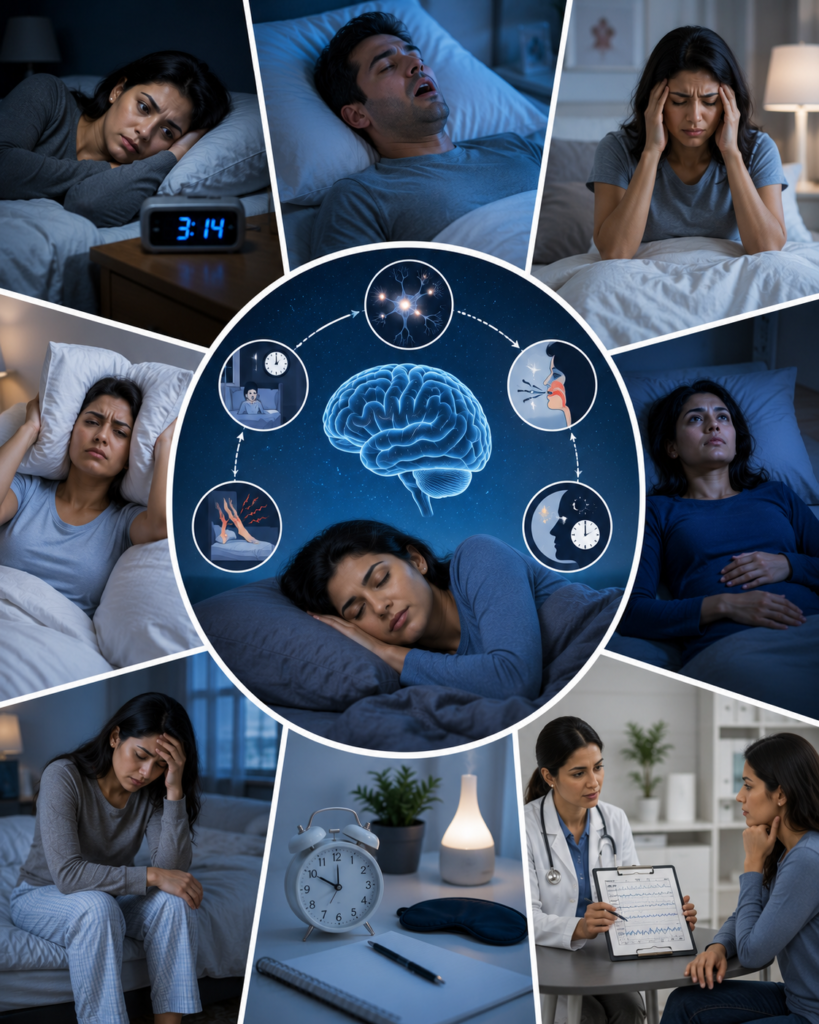
Sleep Disorders Explained: Causes, Symptoms, Types, and Treatment
Sleep is essential for maintaining physical health, mental well-being, and overall quality of life. During sleep, the body repairs tissues, strengthens the immune system, supports brain function, and restores energy. When sleep is disrupted regularly, it can affect nearly every aspect of health.
Sleep disorders are common and can impact people of all ages. Understanding their causes, symptoms, and treatment options can help individuals seek timely care and improve their sleep quality.
What Are Sleep Disorders?
Sleep disorders are medical conditions that interfere with the ability to fall asleep, stay asleep, or achieve restful, restorative sleep. Poor sleep can lead to daytime fatigue, reduced concentration, mood changes, and increased risk of chronic health conditions.
Some sleep problems are temporary, while others require medical evaluation and treatment.
Why Healthy Sleep Is Important
Getting enough quality sleep helps:
- Improve memory and concentration
- Strengthen the immune system
- Support heart health
- Maintain healthy blood sugar levels
- Regulate hormones
- Improve mood
- Increase energy levels
- Support healthy weight management
- Enhance physical recovery
- Improve overall quality of life
Adults generally need about 7–9 hours of sleep each night, although individual needs may vary.
Common Types of Sleep Disorders
Insomnia
Insomnia is one of the most common sleep disorders. People with insomnia may have difficulty:
- Falling asleep
- Staying asleep
- Waking too early
- Returning to sleep after waking
Chronic insomnia can affect work performance, mood, and daily activities.
Sleep Apnea
Sleep apnea causes repeated interruptions in breathing during sleep. Common symptoms include:
- Loud snoring
- Gasping during sleep
- Morning headaches
- Excessive daytime sleepiness
- Poor concentration
Untreated sleep apnea may increase the risk of high blood pressure, heart disease, and stroke.
Restless Legs Syndrome (RLS)
People with restless legs syndrome experience uncomfortable sensations in their legs, often accompanied by an urge to move them.
Symptoms usually worsen:
- During periods of rest
- In the evening
- At bedtime
Moving the legs often provides temporary relief.
Narcolepsy
Narcolepsy is a neurological disorder that affects the brain’s ability to regulate sleep and wakefulness.
Symptoms may include:
- Excessive daytime sleepiness
- Sudden sleep episodes
- Difficulty staying awake during routine activities
Circadian Rhythm Sleep Disorders
These disorders occur when the body’s internal clock is out of sync with normal sleep schedules.
They may affect:
- Shift workers
- Frequent travelers
- Individuals with irregular sleep routines
Common Symptoms of Sleep Disorders
Symptoms vary depending on the condition but may include:
- Difficulty falling asleep
- Frequent nighttime awakenings
- Excessive daytime sleepiness
- Loud snoring
- Breathing pauses during sleep
- Morning headaches
- Difficulty concentrating
- Irritability
- Fatigue
- Poor memory
- Reduced work or school performance
Persistent symptoms should be evaluated by a healthcare professional.
Causes of Sleep Disorders
Sleep disorders can result from various factors, including:
- Chronic stress
- Anxiety
- Depression
- Obesity
- Certain medications
- Chronic pain
- Neurological disorders
- Hormonal changes
- Excessive caffeine
- Alcohol use
- Irregular sleep schedules
Sometimes multiple factors contribute to poor sleep.
Risk Factors
The likelihood of developing a sleep disorder may increase with:
- Older age
- Family history
- Obesity
- Smoking
- Chronic medical conditions
- Mental health disorders
- Shift work
- Lack of physical activity
Understanding risk factors can help guide prevention strategies.
How Sleep Disorders Are Diagnosed
A healthcare professional may evaluate:
- Sleep history
- Medical history
- Daily sleep habits
- Current medications
- Lifestyle factors
- Symptoms affecting daytime functioning
In some cases, additional tests such as a sleep study may be recommended to diagnose specific sleep disorders.
Treatment Options
Treatment depends on the underlying cause and type of sleep disorder.
Possible approaches include:
- Improving sleep habits
- Treating underlying medical conditions
- Behavioral therapy
- Stress management
- Weight management when appropriate
- Medical devices for sleep apnea
- Medications prescribed by a healthcare professional when necessary
Treatment plans are individualized based on the patient’s needs.
Healthy Sleep Habits
Good sleep hygiene can improve sleep quality and reduce sleep problems.
Helpful habits include:
- Maintain a regular bedtime and wake-up time.
- Create a quiet, dark, and comfortable sleep environment.
- Avoid large meals close to bedtime.
- Limit caffeine in the evening.
- Reduce screen time before sleeping.
- Exercise regularly, but avoid vigorous activity just before bedtime.
- Keep the bedroom cool and comfortable.
Consistent routines help regulate the body’s internal clock.
Lifestyle Tips for Better Sleep
Simple daily habits can support restful sleep.
- Stay physically active.
- Eat a balanced diet.
- Manage stress through relaxation techniques.
- Avoid smoking.
- Limit alcohol intake.
- Spend time outdoors during daylight hours.
- Maintain a healthy body weight.
Healthy lifestyle choices often improve sleep naturally.
When to See a Doctor
Consult a healthcare professional if you experience:
- Difficulty sleeping for several weeks
- Loud snoring with breathing pauses
- Persistent daytime sleepiness
- Morning headaches
- Difficulty concentrating due to poor sleep
- Frequent nighttime awakenings
- Sleep problems affecting work, school, or relationships
Early diagnosis can improve treatment outcomes and reduce complications.
Possible Complications of Untreated Sleep Disorders
Without treatment, sleep disorders may increase the risk of:
- High blood pressure
- Heart disease
- Stroke
- Type 2 diabetes
- Obesity
- Depression
- Anxiety
- Reduced productivity
- Motor vehicle or workplace accidents
- Poor quality of life
Timely medical care can help prevent these complications.
Daily Checklist for Healthy Sleep
Support healthy sleep by following these habits:
- Sleep 7–9 hours each night.
- Follow a consistent sleep schedule.
- Limit caffeine later in the day.
- Stay physically active.
- Eat balanced meals.
- Manage stress effectively.
- Keep your bedroom comfortable.
- Reduce screen time before bed.
- Avoid smoking and excessive alcohol.
- Seek medical advice if sleep problems persist.
Conclusion
Sleep disorders are common but treatable health conditions that can affect both physical and mental well-being. Recognizing the symptoms early, understanding the possible causes, and adopting healthy sleep habits are important steps toward better sleep. If sleep problems continue despite lifestyle changes or begin affecting your daily life, seeking professional medical evaluation can help identify the underlying cause and guide appropriate treatment for long-term health and improved quality of life.